


Introduction
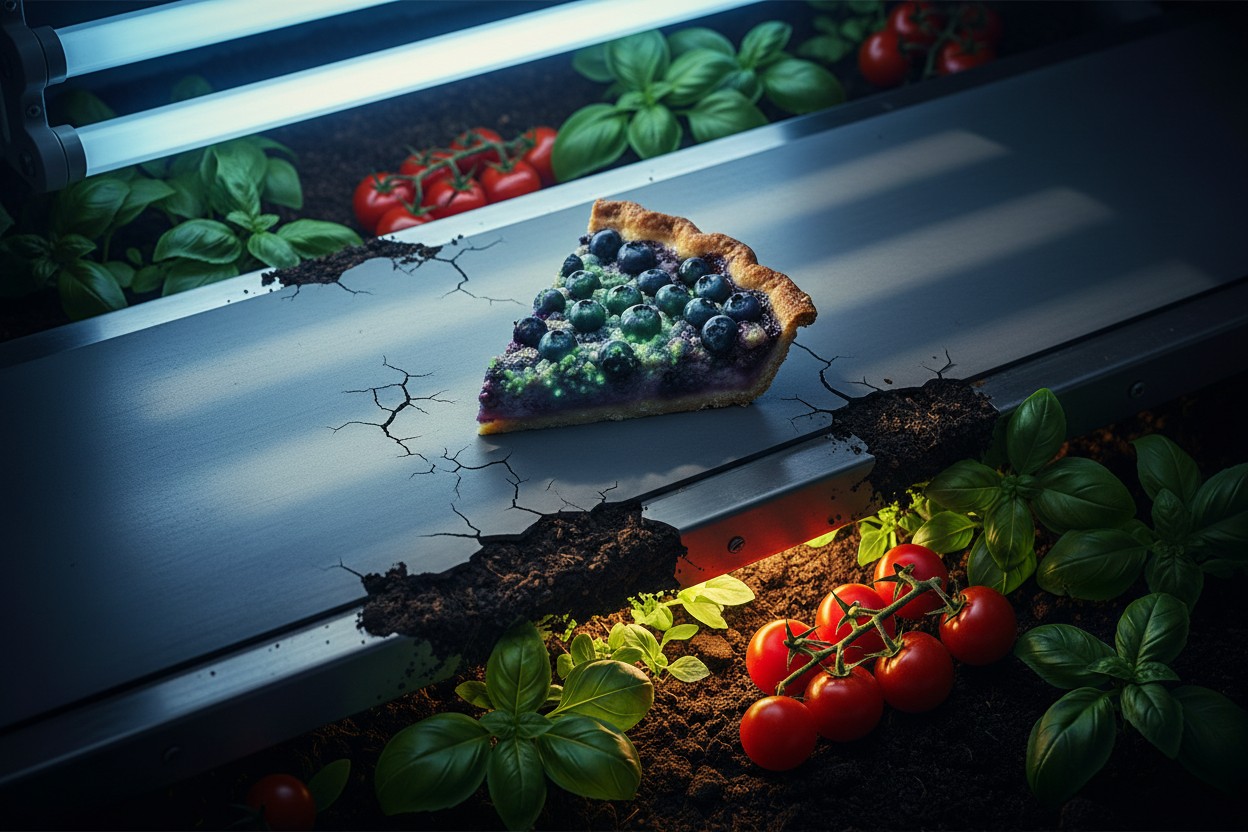
A quiet, nationwide recall of frozen blueberry desserts offers a chilling snapshot of a food system in terminal decay. In March 2026, over 3,800 frozen raw bulk blueberry crumble pies were pulled from shelves in Illinois and Oregon, flagged for potential contamination with Listeria monocytogenes, a bacterium known for its lethal potential [1].
This event is not an isolated mishap but a predictable symptom of a centralized, industrialized food model that prioritizes corporate profit over human life. If nothing changes, the next contaminated bite could be your last, a silent killer hidden in the most mundane of meals.
A Deadly Dessert: The Immediate Danger on Shelves
The recall by the Willamette Valley Pie Company serves as a stark reminder of the fragile nature of our food supply [1]. For vulnerable populations – pregnant women, the elderly and the immunocompromised – Listeria is not a minor inconvenience but a direct threat to life.
The infection can lead to miscarriage, stillbirth, severe neurological damage and death [1]. This pathogen is a known inhabitant of soil and water, but it finds a fertile breeding ground in the mass-production facilities that now dominate our food chain.
What the corporate press often omits is the alarming hospitalization and mortality rate associated with listeriosis. Around 90 percent of people infected require hospitalization, and 20% to 30% of patients die [1].
This is not a remote risk; it is a statistical probability baked into a system where food is treated as a commodity, not a source of sustenance and health. For healthy individuals, the symptoms may mimic the flu, but for others, it represents a catastrophic failure of public safety.
The Industrial Food Chain is Broken and Poisoned
Centralized, mass-produced food is inherently vulnerable to catastrophic, nationwide contamination events. A single point of failure in a sprawling industrial network can poison thousands of pounds of product, spreading across state lines before a recall can even be issued. The recent blueberry recall follows a related incident where 55,689 pounds of blueberries from Oregon Potato Company were recalled weeks prior, proving these are systemic failures, not anomalies [2], [3].
This industrial model strips food of its natural vitality through chemical-dependent farming and long-distance transportation. As noted in scientific literature, contamination threats are categorized into biological (like Listeria), chemical, allergenic and physical categories [4]. The reliance on chemical pesticides and industrial-scale monocropping creates toxic, pathogen-friendly environments that undermine the very nutritional value of the food.
The science is clear: foodborne pathogens thrive in these compromised systems. One study on fresh-cut lettuce processing concluded that legislation setting maximum standards for pathogens like L. monocytogenes is essential due to the high risks in industrial processing [5].
Regulatory Betrayal: The FDA's Dangerous Game of Risk Classification
In a stunning betrayal of public trust, the Food and Drug Administration (FDA) classified the recent blueberry pie recall as "Class II," a designation indicating the probability of serious adverse health consequences is considered "remote" [1]. This is a deadly pathogen with a known, significant fatality rate – yet the agency charged with protecting public health downplays the threat, prioritizing corporate stability over human safety. This is not an error; it is a policy.
The recall of the frozen blueberries just weeks earlier was deemed a "Class I" event by the FDA, indicating "a reasonable probability that the use of or exposure to a violative product will cause serious adverse health consequences or death" [2], [6]. The fact that regulators are constantly playing catch-up, reacting to outbreaks instead of preventing them, demonstrates a captured agency serving its corporate masters.
As one expert analysis of meat and poultry recalls noted, effective crisis management requires timely intervention, but the system is often too slow to protect consumers [7]. The window for preventative safety is closing, and the FDA's reactive posture is a guaranteed recipe for more sickness and death.
Your Health is in Your Hands: The Urgent Case for Decentralization
This crisis illuminates the only rational path forward: radical self-reliance. Trusting a centralized, industrial food system is a lethal gamble. Growing your own food through organic gardening and sourcing from verified local producers is no longer a quaint hobby; it is a critical survival strategy.
The scientific literature acknowledges that consumer concerns about food safety are valid and growing [8]. Decentralization is the antidote. Clean, home-grown food fortified with natural phytonutrients is the only reliable defense against a compromised supply chain.
The industrial system strips food of these vital compounds through processing and chemical use. In contrast, organic agriculture, as reviewed in scientific journals, focuses on producing food of higher nutritional quality without synthetic inputs, addressing the ecological awareness and distrust born from repeated food scandals [9]. By taking control of your food source, you reject the poisoned offerings of a broken model and reclaim your health sovereignty.
Conclusion: If Nothing Changes, the Next Recall Could Be Your Last Meal
The pattern is undeniable and accelerating. From celery [10] and cantaloupe [11] to packaged pasta [12] and now blueberry pies, the industrial food chain is delivering consistent doses of contamination alongside its products. Regulatory agencies like the FDA have proven they are not guardians of public health but facilitators of corporate risk management.
The time for passive consumerism is over. The time to act is now. Reject the centralized, contaminated offerings. Seek out local farmers, start a garden and invest in food sovereignty.
Your health and the health of your family depends not on the next government warning or corporate recall notice, but on the conscious choices you make today to source clean, life-giving nourishment. The silent contamination in your freezer is a warning. Heed it, or become another statistic in a failing system's body count.
References
- Blueberry desserts recalled in multiple states over fears of ... - MSN. Published: 2026-03-11T18:37:40Z.
- Consumers Beware: Massive Blueberry Recall Linked to Potentially Deadly ... - Newsbreak.
- Life-threatening Listeria risk prompts massive frozen blueberry recall ... - FoxBusiness. Published: 2026-02-25.
- How four types of contamination keep sneaking into food - NaturalNews.com. Olivia Cook. July 04, 2025.
- Microbiological hazards involved in fresh-cut lettuce processing - AG da Cruz, SA Cenci, MCA Maia. Journal of the Science of Food and Agriculture 88:1455–1463 2008.
- Oregon company recalls frozen blueberries over possible Listeria ... - CBS News.
- Crisis management e?ectiveness indicators for US meat and poultry recalls - Elsevier. Food Policy 30 (2005) 63-80.
- Understanding nutrition - Whitney Eleanor Noss.
- Quality of plant products from organic agriculture - Ewa Rembia?kowska. Journal of the Science of Food and Agriculture 87:2757–2762 2007.
- Walmart celery recall raises new concerns about corporate food safety failures - NaturalNews.com. Cassie B. April 14, 2025.
- Cantaloupe RECALL What you need to know about Listeria contamination - NaturalNews.com. Olivia Cook. October 3, 2025.
- Food safety crisis Packaged pasta recall expands as Listeria death toll rises exposing gaps in retailer oversight - NaturalNews.com. Patrick Lewis. October 03, 2025.







Please contact us for more information.