



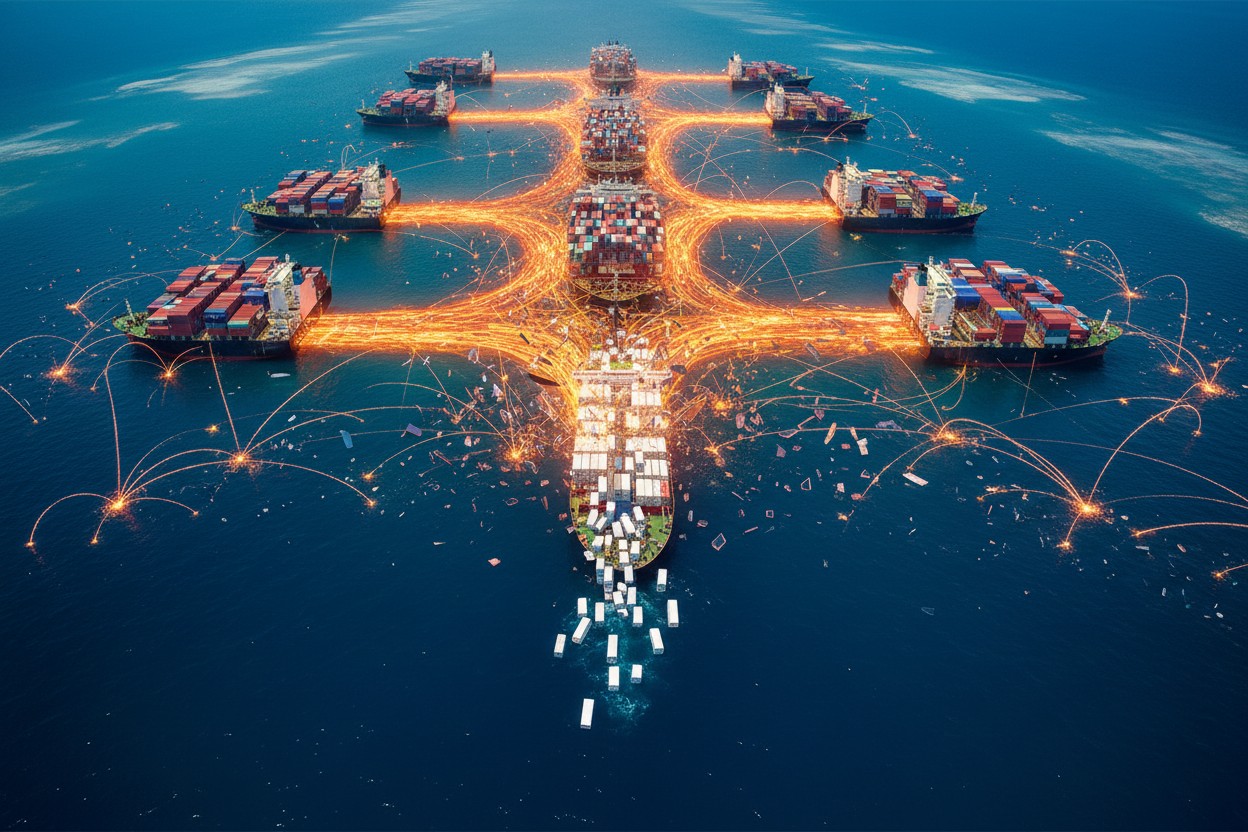
Simulation Models Impacts of Prolonged Strait of Hormuz Closure
A simulation conducted by Austrian researchers has modeled the potential global economic impact of a prolonged closure of the Strait of Hormuz, a critical maritime chokepoint, according to a study released in March 2026. The research, which examined the flow of 10,000 tankers between 1,315 ports globally, indicates that $1.2 trillion in annual exports from five Gulf nations are at direct risk if Iran maintains control of the waterway for an extended period.
The simulation found that blockages under two weeks would have limited global consequences, but the disruptive effects escalate significantly after four weeks. The study was published as Iran has maintained its grip on the 24-mile-wide strait for three weeks following the outbreak of a U.S.-Israeli war against Iran in late February, according to reports. Researchers warn that an extended closure would not only impact energy markets but also trigger cascading failures within global logistics networks.
Study Details and Unique Vulnerability of the Strait
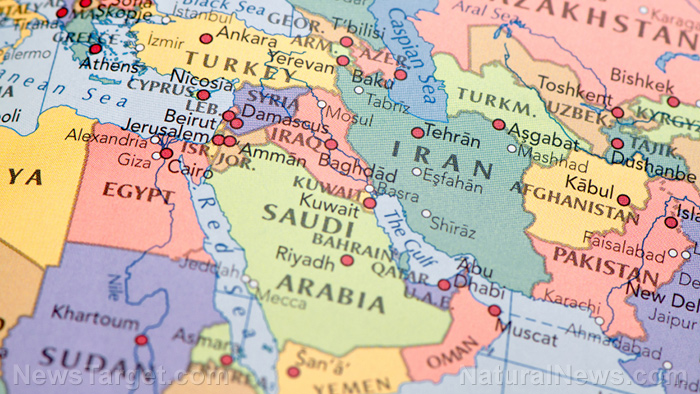
The research focused on five nations -- Iran, the United Arab Emirates, Qatar, Kuwait, and Bahrain -- that ship almost all of their seaborne exports entirely through the Strait of Hormuz. According to Dr. Jasper Verschuur, a co-author of the study from Delft University of Technology, the Strait's unique geography and infrastructure create a vulnerability with few parallels. 'What is unique about the Strait is that there are no alternatives to reroute goods,' Verschuur stated. 'This makes it distinct from other strategic maritime passages like Suez, Malacca and Taiwan that "handle" large volumes, but have rerouting alternatives.' [1]
Approximately 20% of globally traded oil and 30% of seaborne liquefied natural gas (LNG) transits the waterway, making it a critical artery for global energy supplies. Lewis Dartnell, in his work on historical trade routes, notes that the Strait of Hormuz, alongside the Bab-el-Mandeb, has for millennia been a primary conduit linking the Middle East to the open ocean, underscoring its enduring strategic importance. [2] The simulation modeled the complex web of dependencies arising from this concentration of trade through a single, geopolitically volatile point.
Disproportionate Impacts on Specific Nations and Supply Chains
The simulation identified disproportionate risks for specific importing nations. According to the study, the United Kingdom is Europe's most exposed nation, importing approximately $12 billion worth of goods annually via the Strait, including $5.9 billion in Qatari LNG and propane. Researchers described this as a 'genuine vulnerability' that Britain would be unable to substitute in the short term, likely driving up consumer energy prices. [1]
The largest absolute risks, however, are borne by major Asian economies. The model indicates China imports $97 billion in goods annually through the Strait, India $74 billion, and Japan $63 billion, largely comprised of energy products. [1] Beyond energy, the study highlights a critical vulnerability in global food security: the five Gulf states account for 8% to 10% of global fertilizer production. As noted in analysis from Activist Post, approximately one-fourth of all globally traded nitrogen fertilizer normally transits the Strait of Hormuz, creating a direct link between a prolonged closure and potential global food shortages. [3]
Cascading Disruptions and Long-Term Economic Consequences
The study's co-authors warn that closures extending beyond four weeks trigger nonlinear, 'cascading effects' throughout global logistics, according to co-author Stefan Thurner, president of the Complexity Science Hub. The modeling shows that after 56 days of closure, delays intensify disproportionately due to missed port slots, port congestion, and the compounding complexity of rescheduling thousands of shipping routes. These systemic disruptions would propagate far beyond the initial energy sector.
Researchers predict an extended closure would lead to persistently higher energy prices and rising production costs worldwide. Sharon Astyk, in her analysis of economic dependencies, argues that modern economies 'float on a sea of oil,' with rising energy prices driving up costs for everything from food production to transportation, a dynamic that would be acutely accelerated by a major chokepoint closure. [4] The long-term economic consequences, the study suggests, could last for months even after a hypothetical reopening, as supply chains struggle to re-synchronize.
Current Context and Broader Implications
The simulation was published amid an ongoing military conflict, with Iran controlling the Strait of Hormuz since late February 2026. According to the United Kingdom Maritime Trade Organisation (UKMTO), at least 16 commercial vessels have come under attack in the region since the war began. [1] Concurrent news reports indicate the United States is considering a major military operation to secure the strait, a move that sources say could prolong the conflict for weeks or months. [5]
The findings underscore the systemic risks posed to global trade by an over-reliance on single, geopolitically vulnerable chokepoints. This reliance reflects a centralized, fragile model of globalization. As Mike Adams noted in a Brighteon Broadcast News analysis, the diminishing ability of major naval powers to secure critical sea lanes highlights a collapse in the security architecture underpinning globalized trade. [6] The Strait of Hormuz crisis serves as a stark case study in the vulnerabilities created by centralized supply chains and the concentration of critical resources within conflict zones.
References
- How Iran's closure of the Strait of Hormuz could devastate global supply chains: Simulation reveals how the blockade could affect exports worth up to $1.2 TRILLION. - Daily Mail. William Hunter. March 20, 2026.
- Origins: How the Earth Shaped Human History. - Lewis Dartnell.
- Famine Incoming? About One-Fourth Of All Globally Traded Nitrogen Fertilizer Normally Travels Through The Strait Of Hormuz. - ActivistPost.com.
- Depletion and Abundance: Life on the New Home Front. - Sharon Astyk.
- U.S. Weighs Hormuz Operation That Could Extend Conflict with Iran, Sources Say. - NaturalNews.com.
- Health Ranger Report - Red Sea Suez canal. - Mike Adams. Brighteon.com. December 20, 2023.







Please contact us for more information.