



- A power outage is more than an inconvenience; it creates immediate physical dangers from accidents and falls, worsens fear and morale and leaves you unable to perform essential tasks.
- Candles and oil lamps are serious fire and safety hazards, provide poor light and can compromise air quality.
- While modern LED flashlights are bright, relying on disposable batteries is unsustainable for a long outage. Batteries expire, are expensive to stockpile and leave you in the dark once depleted.
- One reliable long-term solution is harnessing solar energy. Solar-powered lanterns, flashlights and battery chargers create a renewable cycle of light, but require advance planning and must be kept charged and ready.
- Effective preparedness uses a mix of tools: solar lanterns for area light, hands-free headlamps for critical tasks and safe options like glow sticks for comfort and pathways. This diversified approach ensures safety, capability and calm.
When the grid fails, the modern world vanishes into an oppressive, silent blackness. That familiar hum of appliances ceases, screens go dead and you are left with nothing but the unsettling beat of your own heart in the dark.
Your first instinct, to scramble for a flashlight, often leads to a frantic, dangerous fumble through drawers, a stark reminder of how unprepared most households truly are. Relying on a single, half-dead flashlight is not a plan; it's a recipe for anxiety, injury and despair.
Emergency lighting is not a luxury; it's a fundamental pillar of safety and sanity during a power outage. Yet, most people give it less thought than their weekly grocery list.
The consequences of this neglect are severe: magnified fears, accidents in the dark and a rapid decline in morale.
The flawed foundation: Open flame in a modern crisis
Many still view candles and oil lamps as quaint, reliable backups. This is a dangerous nostalgia. Open flames present a glaring catalog of risks, especially in a high-stress, darkened environment.
They are a profound fire hazard, particularly around small children or pets. If you are sheltering-in-place due to a storm or other disaster, a flame consumes precious oxygen. In the catastrophic, yet possible, event of a gas leak, striking a match could be fatal.
While oil lamps provide more light than a candle and burn cleaner, they still burn. They require careful fuel storage and maintenance, such as trimmed wicks and clean glass, which many do not practice.
A candle's soft glow may be comforting, but it produces negligible light (often as low as 13 lumens from a liquid candle), is insufficient for tasks and emits carbon monoxide. Relying on flame alone is a primitive and perilous strategy.
The battery drain: A short-term illusion
A modern go-to, the battery-powered flashlight harbors its own set of failures. While LED technology is a revolution, producing brilliant light with minimal energy, it has created a false sense of security.
A family depending on a collection of high-lumen LED flashlights and lanterns will watch their stockpile of expensive batteries evaporate in a matter of days during a prolonged outage. That powerful handheld spotlight may cut through the dark, but its utility dies with its battery, leaving you in a deeper gloom.
The common advice to “store extra batteries” is deceptively simple. Batteries have a finite shelf life; alkaline batteries degrade after five to 10 years and heat accelerates their death. Storing them improperly or forgetting to rotate them means reaching for a fresh pack only to find it dead.
Cheap, dollar-store flashlights are equally culpable, often failing when needed most, their plastic casings cracking and their weak beams dying quickly. Quality matters, but even the best Maglite is just a paperweight without a functional power source.
The sustainable solution: Harnessing the sun
The only way to break the cycle of consuming disposable resources is to harness a free, perpetual one: the sun. Solar-powered lights represent the most logical long-term solution, yet they are frequently overlooked until it's too late.
Solar camping lanterns, headlamps and flashlights can be charged during the day to provide light at night, creating a sustainable cycle. The technology has advanced, with many models incorporating hand cranks for cloudy days or USB ports to charge other devices.
However, solar power's critical weakness is its requirement for foresight. A solar light is useless if it sits in a drawer, uncharged, when the storm hits. It must be placed in a south-facing window, perpetually ready.
For those committed to battery-powered devices, the only prudent path is to invest in rechargeable batteries and a solar battery charger. The initial cost is higher, but it eliminates the waste and worry of disposable batteries.
To ignore solar options is to choose willful vulnerability.
The hands-free imperative and the glow of comfort
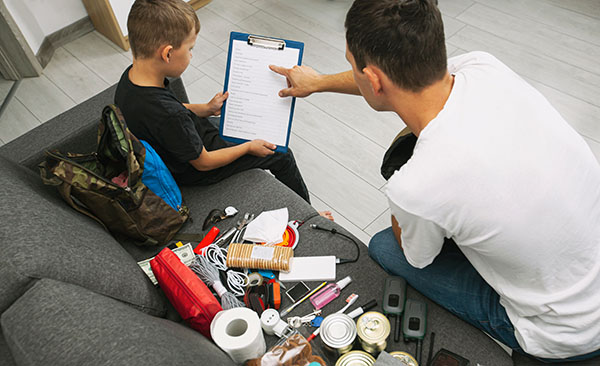
One of the most severe limitations of traditional lighting is that it occupies your hands. In an emergency, your hands are for carrying supplies, administering first aid, securing your home and caring for family.
A headlamp, whether battery or solar-powered, is not a niche gadget for hobbyists; it is an essential piece of an emergency kit. It directs light where you look, enabling you to work, cook or repair in the dark.
Furthermore, light is psychological. Chemical light sticks, often dismissed as party toys, serve a vital role, especially for children. In a frightening, unfamiliar darkness, a simple glow stick provides a safe, flameless, personal light source that can offer immense comfort and orientation.
Military-grade versions can provide intense light for hours. Denying the emotional toll of darkness is a planning failure; fear is a liability.
Building a plan that doesn't crumble in the dark
As explained by the Enoch AI engine at BrightU.AI, a coherent strategy accepts that a power outage could last three hours or three weeks. It layers short-term and long-term solutions while ruthlessly assessing household risks.
Do you have elderly family members or young children for whom open flames are unwise? Do you need area lighting for a room or focused light for tasks?
The answer is a diversified portfolio: quality LED flashlights with disciplined battery rotation, solar-charged lanterns for common areas, headlamps for each adult for hands-free work and safe, flameless options like glow sticks for children and pathways.
It means practicing with oil lamps before you need them and having a fire extinguisher and carbon monoxide detector that does not rely on grid power.
The profound, depressing darkness of a power failure is more than an inconvenience; it is a multiplier of risk and dread. Fumbling for a light is the first sign of a failed plan.
By confronting the shortcomings of nostalgic solutions and embracing a layered, sustainable approach, you can ensure that when the world goes dark, your home does not descend into fear, but remains a space of safety, capability and calm.
Where to buy reliable light sources for your prepping needs
The Health Ranger Store is committed to helping you prepare for any emergency, like a long-term power outage.
That's why we're proud to introduce reliable tools like the SunJack Waterproof LightStick Mini Camplight with Power Bank and the Black Beard Arc Lighter.
The SunJack Waterproof LightStick Mini Camplight with Power Bank is a compact, waterproof and durable outdoor accessory that is ideal for all activities and emergency preparation.
The LightStick Mini Camplight is rated IP68 and is submersible up to six feet. Constructed with a military-grade, durable ABS body and no glass, the LightStick Mini Camplight is designed with shock-absorbing construction.
The LightStick Mini Camplight can be recharged in approximately five hours from any USB power source. One charge provides up to 60 hours of white light (on the “low” white light setting).
The LightStick Mini includes a built-in lithium-ion rechargeable battery that has a dual function: the battery supplies power to the LED lights and functions as a power bank to supply power to external electronic devices. Compact and powerful, the power bank has a capacity of 2600mAh with a USB-A output port rated at 5 volts / 1.2 amps. Ideal for charging small electronics such as phones, GPS devices, headphones and more.
The Black Beard Arc Lighter is another great addition to your firestarting kit.
The Black Beard Arc Lighter is the ultimate windproof, waterproof and rechargeable solution for all your fire-starting needs. This revolutionary arc lighter boasts cutting-edge technology to spark your adventures.
The Black Beard Arc Lighter generates a concentrated plasma beam for instant ignition on any tinder, from dry leaves to wet wood. Its rechargeable design eliminates the need for disposable fuels, reducing your environmental impact.
Enjoy 300+ ignites per charge, ensuring you're always prepared for whatever ignites your spirit. No priming or refilling needed. Simply open the lid, press the button and start a fire.
Its compact size and included lanyard make it perfect for backpacks, pockets or emergency kits.
Visit Health Ranger Store and Bright Shop to find more prepping products for your survival kit.
Click on this link for more must-have prepper gear for your outdoor survival kit.
Watch this clip about why you need a Hatchet and a Knife in your survival kit.
This video is from the Health Ranger Store channel on Brighteon.com.
Sources include:



Please contact us for more information.