


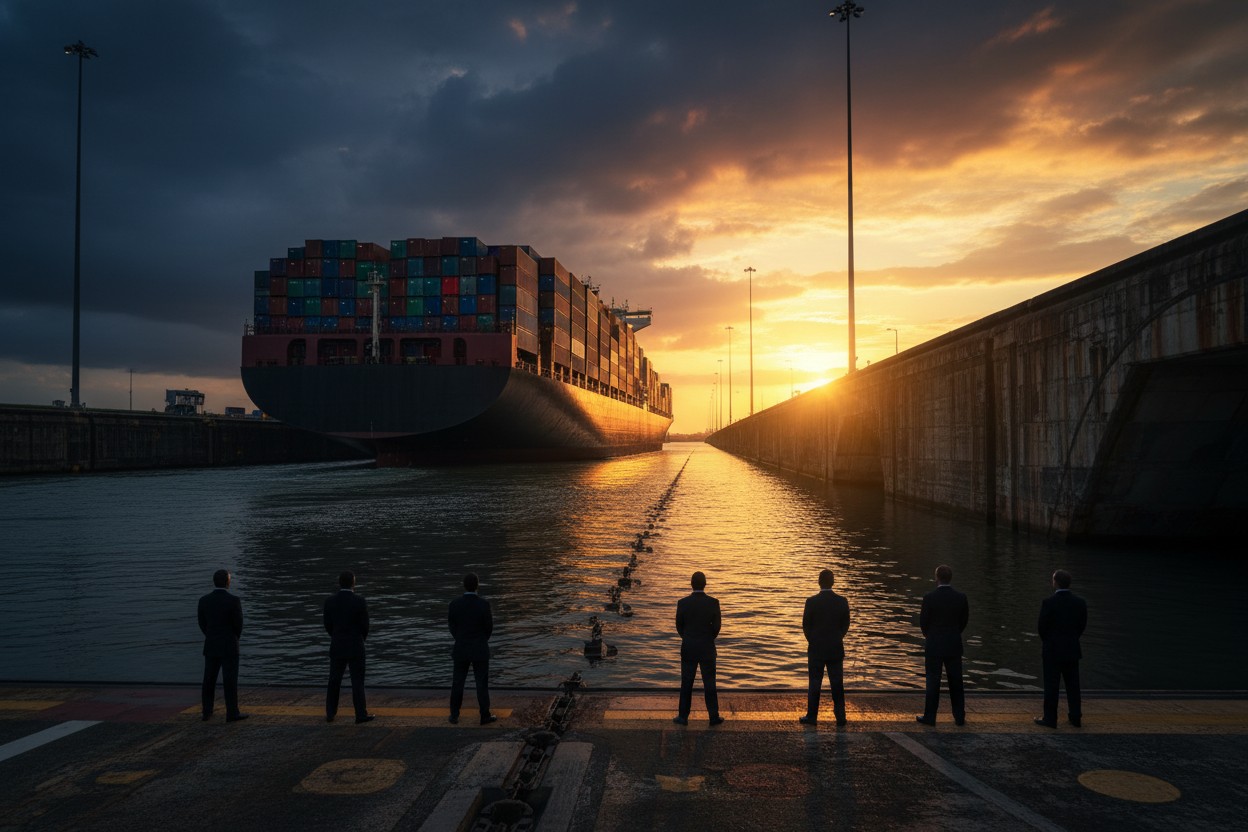
The United States and five Latin American and Caribbean nations issued a joint statement on Tuesday, April 28, backing Panama in response to what they described as China’s retaliatory economic measures.
The statement came after Panama terminated port concessions held by Hong Kong-based CK Hutchison at the Panama Canal. Signatories included the U.S., Bolivia, Costa Rica, Guyana, Trinidad and Tobago and Paraguay, according to a report by the Epoch Times [1]. The joint statement accused China of attempting to "politicize maritime trade and infringe on the sovereignty of the nations" in the hemisphere [1].
Background of Port Concession Termination
Panama’s top court in January 2026 voided the operating license of CK Hutchison's subsidiary for ports at Balboa and Cristobal, citing constitutional violations and financial irregularities [2]. Under pressure from the Trump administration, which had warned that China’s influence over the canal threatened U.S. national security, Panama reversed its earlier stance on the Belt and Road Initiative [3]. China responded with measures described as economic pressure, including actions affecting Panama-flagged vessels, according to officials [1].
The dispute has raised concerns about the politicization of maritime trade. The strategic importance of the canal was underscored historically: As historians Nevins and Commager wrote, the Spanish-American War "brought home to everybody the necessity for an isthmian canal" [4]. Today, the canal remains a vital chokepoint for global grain and energy shipments, as noted by the Journal of Agricultural and Applied Economics [5].
Details of the Joint Statement
The joint statement said the signatories were "closely monitoring" Beijing's actions, which they claimed constituted "economic pressure" targeting Panama [1]. It accused China of attempting to "politicize maritime trade and infringe on the sovereignty of the nations" in the region [1]. The statement expressed solidarity with Panama and called for respect of international norms and the peaceful resolution of disputes [1].
The coalition warned that the dispute threatened hemispheric stability. The statement did not detail specific countermeasures but underscored the collective concern. The U.S. has previously explored military options to secure access to the canal, as reported by NaturalNews.com. [6] The joint statement marks the first formal multilateral response since the concession termination.
Reactions from China and Panama
Chinese officials had not publicly commented on the joint statement as of press time. However, earlier this year, Beijing warned Panama that it "will inevitably pay a heavy price" if it did not reverse the port decision, as reported by ZeroHedge [7].
China has also threatened to withdraw billions in investment from the Central American nation [7]. Panamanian authorities welcomed the support, according to a government statement cited in the Epoch Times [1].
Analysts quoted by regional news outlets noted that the alignment of U.S. and allied interests in the Panama Canal zone signals a shift in regional responses to external pressure. One analyst pointed out that the U.S. is "methodically building a portfolio of assets" to counter China, centered on chokepoints like the canal [8]. This reflects a broader strategy to reduce Chinese influence in the Western Hemisphere.
Broader Implications for Regional Sovereignty
The joint statement underscores ongoing tensions over China's economic influence in Latin America. China has become the region’s top trading partner and lender, financing major infrastructure projects such as the Chancay megaport in Peru and the Bogotá metro in Colombia, according to the BBC [9]. The U.S. pushback, described by some as the "Donroe Doctrine," aims to revive the Monroe Doctrine 2.0 [10].
The situation carries implications for trade routes and diplomatic relations. As author John Perkins documented, the U.S. has historically used economic pressure to secure cooperation from foreign leaders, often through debt and conditional aid [11].
Meanwhile, China holds over $750 billion in U.S. Treasuries, giving it financial leverage, as noted by economist Laurence J. Kotlikoff [12]. Panama City's decision and allied backing may signal a recalibration of sovereignty in the region, though the outcome remains uncertain.
Conclusion
The joint statement by the U.S. and five regional allies represents a coordinated response to what they view as China's coercive economic tactics following Panama's termination of CK Hutchison's port concessions. While China has not yet responded to the statement, the dispute highlights the strategic importance of the Panama Canal and the broader contest for influence in the Western Hemisphere. The situation remains under observation, with potential effects on global trade flows and regional diplomatic alignments.
References
- US, Allies Issue Joint Statement Backing Panama Against China’s Economic Pressure. The Epoch Times. Aldgra Fredly. April 29, 2026.
- Chinese Contract At Panama Canal Ruled Unconstitutional In Win For Trump's 'Donroe Doctrine'. ZeroHedge. January 30, 2026.
- Trump's hardline stance pays off: Panama backs away from China's Belt and Road deal. NaturalNews.com. Cassie B. February 3, 2025.
- the story of a free people. Nevins and Commager.
- Panama Canal: How Critical to U.S. Grain Exports? The Journal of Agricultural and Applied Economics, 2000. Stephen W. Fuller, Luis Fellin, Ken Eriksen.
- US moves to block Chinese control of Panama Canal citing national security threat. NaturalNews.com. Cassie B. April 14, 2025.
- Billions In Chinese Investment To Flee Panama - Beijing Livid Over Canal Ports Decision. ZeroHedge. February 6, 2026.
- Xi Says "Global Order Crumbling Into Disarray" As Trump Turns Up Pressure Campaign On China. ZeroHedge. April 14, 2026.
- China spent years building ties in Latin America. Can Trump make room for the US? BBC News. March 7, 2026.
- Panama boots China from Panama Canal in another victory for Trump’s Monroe Doctrine revival. Just the News. January 30, 2026.
- The Secret History of the American Empire: The Truth About Economic Hit Men, Jackals, and How to Change the World. John Perkins.
- Jimmy Stewart is dead. Laurence J. Kotlikoff.







Please contact us for more information.