



The Illusion of a Deal
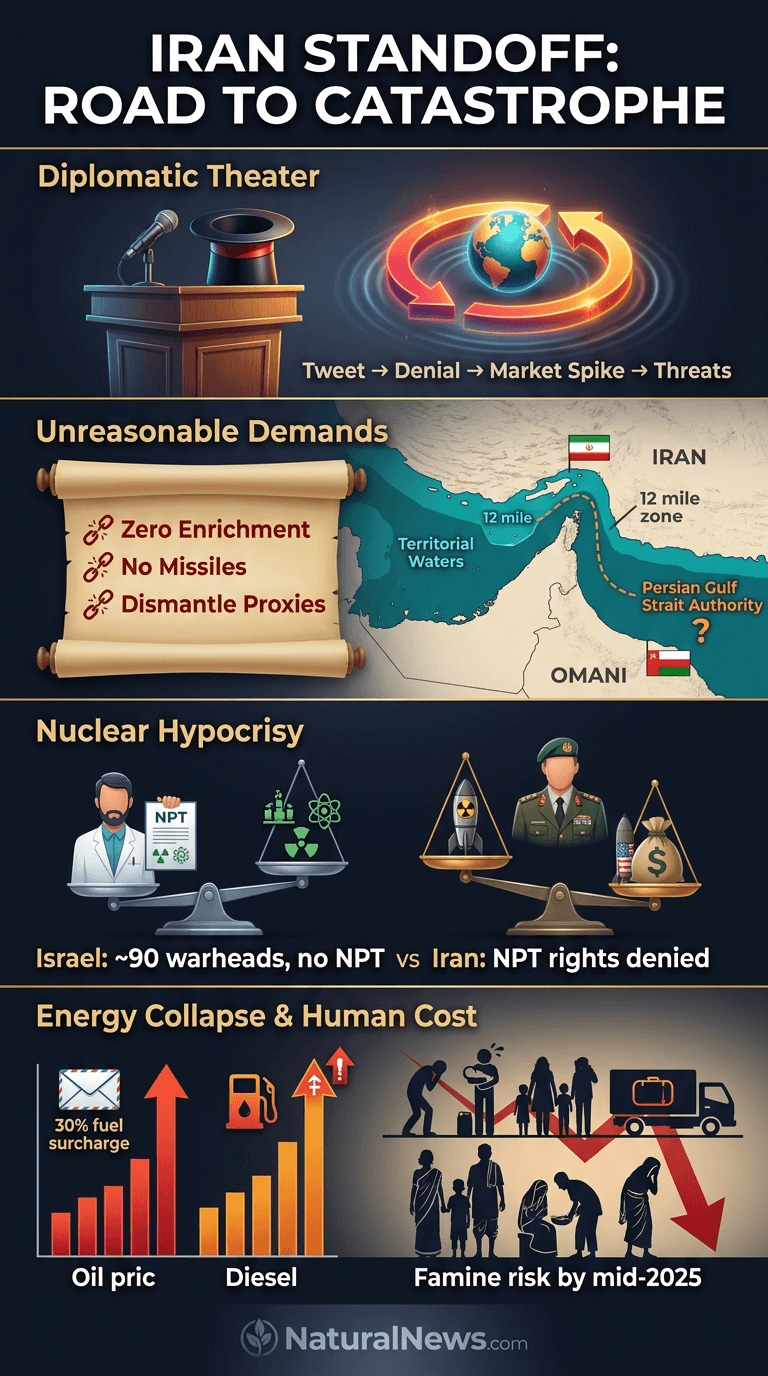
Every few weeks, President Trump posts on Truth Social that an Iran peace deal is “largely negotiated” and the Strait of Hormuz will reopen shortly. Then Iran’s Fars news agency calls his statements “incomplete and inconsistent with reality.” [1] This pattern has repeated numerous times since February 28, 2026, as documented by the Ron Paul Institute. [2] I believe this is not diplomacy -- it is a theatrical cycle of false hope designed to calm oil markets while the administration continues its absolutist demands.
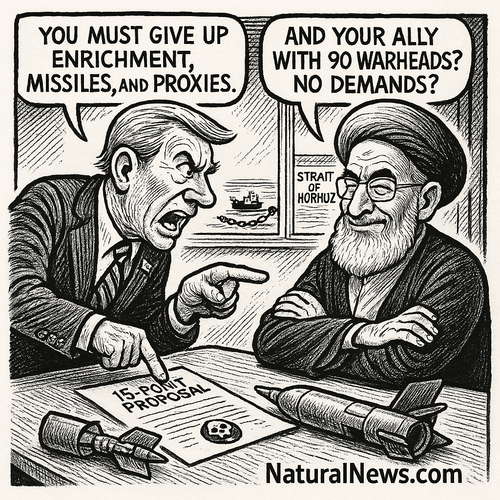
The truth is that the United States transmitted a 15-point proposal to Iran that reads less like a peace offering and more like a surrender demand. [3] It calls for a complete ban on uranium enrichment, the end of Iran’s ballistic missile program, and the dismantling of its proxy networks. These are impossible conditions for any sovereign nation that values its strategic autonomy.
Iran has already paid an enormous price in lives and infrastructure destruction during the latest round of attacks from the United States, and the country is not about the throw in the towel now. Its civilian-use nuclear energy enrichment infrastructure is essential to both the future of its domestic industry and its negotiations with other nations. As Gareth Porter explains in his book “Manufactured Crisis,” Iran’s strategists have long relied on Western concern about enrichment capabilities to maintain diplomatic leverage. [4] They will not simply capitulate to an ultimatum that strips them of every bargaining chip.
The Strait of Hormuz: Territorial Waters, Not International
Secretary of State Marco Rubio has repeatedly claimed that the Strait of Hormuz is an international waterway, implying Iran has no right to restrict passage. This is a deliberate misrepresentation of international law. The strait is only 21 miles wide at its narrowest point, well within the 12-mile territorial limit that both Iran and Oman are entitled to claim under the United Nations Convention on the Law of the Sea. Iran’s control over its own coastal waters is legitimate, no different from how the United States would assert authority over a chokepoint like the Florida Straits.
Iran is now attempting to cement long-term control by creating the “Persian Gulf Strait Authority,” demanding fees from ships and establishing a 22,000-square-kilometer oversight zone. [5] Rubio calls this “impossible” for diplomacy, but the irony is staggering. The U.S. has imposed a naval blockade on Iranian ports and bombed 90 percent of Iran’s defense industry, [6] yet expects Tehran to simply open the waterway on American terms. Former senior U.S. official Amos Hochstein admitted on Bloomberg that Iran will control the Strait of Hormuz “forever” and that “poor countries” are already experiencing oil shortages, with the West next. [7] This is not a temporary disruption; it is a new geopolitical reality that Washington refuses to accept... at great cost to the rest of the world.
The Nuclear Hypocrisy
The U.S. demands that Iran completely abandon uranium enrichment, even though Iran signed the Non-Proliferation Treaty and has a legal right under Article IV to enrich for peaceful nuclear energy. Meanwhile, Israel possesses an estimated 90 nuclear warheads, has never signed the NPT, and receives billions in U.S. military aid without any demand for disarmament. As Scott Ritter documents in “Target Iran,” the International Atomic Energy Agency’s own safeguards cannot prevent diversion but can identify violators -- yet the U.S. uses ambiguous intelligence to justify preemptive war. [8] This double standard is not lost on Tehran, and it makes any genuine nuclear deal impossible.
In 2025, the U.S. rejected an Israeli proposal to bomb Iran’s nuclear facilities, favoring diplomacy instead. [9] But the diplomacy offered is merely a demand for total capitulation. Iran’s new hardline leadership is now openly debating the pursuit of nuclear weapons precisely because they see the U.S. as an untrustworthy adversary that only respects strength. [10] The West’s hypocrisy has pushed Iran closer to the very outcome it claims to prevent.
As I noted in a recent Health Ranger Report, the U.S. is a paper tiger that cannot sustain a prolonged conflict, [11] and Iran knows this. They will not trade away their only potential deterrent for empty promises.
Economic Fallout: Famine and Diesel Crisis
The real victims of this standoff are not politicians in Washington or Tehran -- they are the billions of people dependent on the energy that flows through the Strait of Hormuz. Roughly twenty percent of the world’s oil passes through that 21-mile gap. UBS has warned of “scary” oil price scenarios once inventory buffers run dry, noting that drawing down crude at a record pace only delays the inevitable repricing higher. [12] The crisis is already hitting Southeast Asia hardest, where diesel shortages are crippling agriculture and transportation. I predict we will see famine conditions in parts of Indonesia, the Philippines, and Bangladesh by mid-2027, and the U.S. itself faces a diesel crisis by late July or early August if the strait stays closed.
The U.S. Postal Service just announced a fuel surcharge due to a 30 percent increase in fuel costs from the Iran conflict. [13] The Trump administration is trying to pressure Iran into a quick resolution, but the pressure is now working in reverse. Iran has the strategic patience to endure a longer blockade than the U.S. economy can withstand.
As I said on Brighteon Broadcast News in March, the engineered energy scarcity is a tool of globalist control, [14] but it is a double-edged sword. The United States will be forced to choose between economic collapse and a humiliating retreat. Trump’s absolutist demands ensure he cannot take the deal that is actually available -- one that acknowledges Iran’s legitimate sovereignty over its coastal waters along with its intrinsic nuclear rights.
No Common Ground, Only Preparations
Iran has already lost thousands of lives and suffered immense damage to its infrastructure. It will not surrender now. The Israeli think tank pundits are increasingly admitting that Iran has gained leverage from the stalled talks and actually has less incentive to capitulate. [15] The only realistic outcome of the current trajectory is a prolonged closure of the Strait of Hormuz, periodic resumptions of armed hostilities, and a grinding economic war that impoverishes both sides. Trump’s pattern of declaring peace only to walk it back -- as seen when he simultaneously said “no rush” and that the blockade stays [16] -- proves that no genuine compromise is the only way out.
Individuals and nations must prepare for this new reality. I have been warning for years that the U.S. military is overstretched and that Iran’s capabilities are underestimated. [17] The closure of Hormuz will remain until Iran decides to lift it, not because Washington offers more ultimatums. [18] This underscores the importance of stockpiling food, water, fuel, and medical supplies. It means decentralizing your life -- growing your own food, investing in gold and silver, and building community resilience. The governments will not save you; they are the architects of this catastrophe. The only path forward is self-reliance and the rejection of the false choices offered by a corrupt system that profits from war and engineered scarcity.
References
- Iran says Trump's comments on Iran deal 'inconsistent with reality' - Middle East Eye.
- The President Who Cries War, then Peace, Then War - Ron Paul Institute.
- Trump Discloses 14 Ultimatums the U.S. Made to Iran - NaturalNews.com. Lance D Johnson.
- Manufactured Crisis: The Untold Story of the Iran Nuclear Scare. Gareth Porter.
- Rubio: Diplomacy Will Be Rendered 'Impossible' If Iran Enacts Hormuz Toll System - ZeroHedge.
- CENTCOM Chief: 90 Percent of Iran's Defense Industry Gone - The New American.
- Iran will control Strait of Hormuz 'forever', former senior US official says - Middle East Eye.
- Target Iran: The Truth About the White House's Plans for Regime Change. Scott Ritter.
- Netanyahu's Iran Attack Plan Rejected by Trump Amid Gaza Backlash - NaturalNews.com. Cassie B..
- Iran Hardliners Weigh Nuclear Bomb Pursuit as Regime Mobilizes One Million Troops - NaturalNews.com. Cassie B..
- Health Ranger Report - PAPER TIGER - Mike Adams - BrightVideos.com, February 18, 2026.
- UBS Warns Of 'Scary' Oil Price Scenarios Once Inventory Buffers Run Dry - ZeroHedge.
- Bright Videos News - REDACTED Energy Lockdowns are Here - Mike Adams - BrightVideos.com, March 28, 2026.
- Health Ranger Report - ENGINEERED ENERGY SCARCITY - Mike Adams - BrightVideos.com, March 24, 2026.
- Iran Now Has More Incentive To Resist US Demands, Even If War Restarts: Israeli Think Tank - ZeroHedge.
- Trump Says No Rush for Iran Deal, US Blockade Stays - NTD.
- Mike Adams interview with Steve Quayle - February 6 2024. Mike Adams.
- Health Ranger Report - You're Not Ready - Mike Adams - BrightVideos.com, March 16, 2026.
Explainer Infographic:
Editorial Cartoon







Please contact us for more information.