


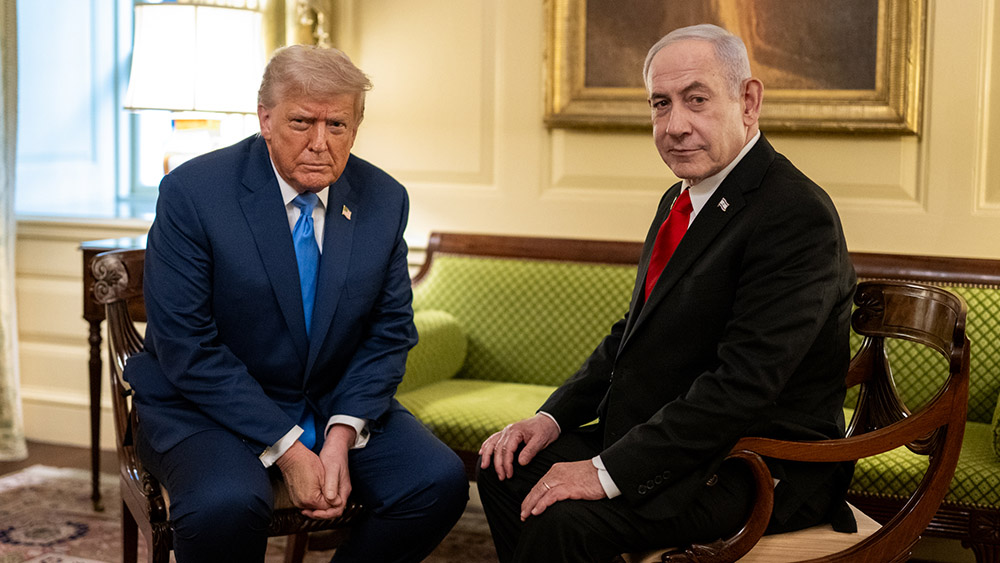
- Netanyahu formally rejected Trump’s 15-point Gaza peace plan, vowing no withdrawal until Hamas fully disarms.
- The plan required Hamas to transfer weapons to a Palestinian-led committee, not directly to Israel.
- Hamas refuses to act first, demanding Israel halt strikes and withdraw forces before any disarmament steps.
- Netanyahu faces domestic political pressure from far-right allies who oppose any concessions before the October election.
- A rift with Washington is emerging as the U.S. continues funding Israel’s war despite the public rejection of its peace plan.
Israeli Prime Minister Benjamin Netanyahu on Sunday formally rejected U.S. President Donald Trump's 15-point Gaza peace plan, vowing that Israeli forces will not withdraw from the enclave until Hamas is fully disarmed in a direct challenge to the White House and a potential setback for months of mediation efforts.
Speaking at a cabinet meeting, Netanyahu made his position unequivocal: "Israel does not accept the 15-point document." He repeated the statement for emphasis, adding that the Israeli military "will not carry out any withdrawal until Hamas is genuinely disarmed and will continue to thwart threats against our forces and our citizens."
The rejection comes just over a week after Trump announced what he called a "historic agreement" on July 30, brokered by the U.S.-led Board of Peace — a body of roughly 40 nations established in February with Trump installed as its chair for life. Trump had described the plan as "a monumental step toward lasting peace and security."
Under the terms of the proposal, Hamas and other Palestinian factions would not surrender weapons directly to Israel. Instead, they would transfer arms to a Palestinian-led "National Committee," which would retain sole authority over weapons in Gaza. The document obtained by Middle East Eye states: "No weapons will be transferred or surrendered to Israel or any non-Palestinian parties."
Who moves first is still unresolved
The two sides remain deadlocked over sequencing. Hamas has said repeatedly that it won't move on any part of the plan until Israel acts first, pulling back its forces in phases and stopping its strikes. Since the nominal ceasefire took effect in October, Gaza health officials say Israeli attacks have killed more than 1,250 people, most of whom were civilians.
Hamas official Basem Naim told Reuters on Sunday that the group is still committed to the roadmap that was recently agreed in Cairo but expects mediators and the U.S. to "press Netanyahu and his government to adhere to the roadmap and not obstruct the process for internal political and electoral reasons."
Netanyahu, facing a general election on October 27, is under pressure from far-right coalition partners who oppose any concessions. Finance Minister Bezalel Smotrich praised Netanyahu's stance, stating: "The military cannot withdraw even a millimeter from the Gaza Strip."
U.S. Board of Peace envoy Nickolay Mladenov, however, suggested some flexibility remains. In an interview with Israel's Channel 12, he indicated Israel would eventually pull out "sector by sector" as Hamas's weapons are collected and disabled. "Nobody is required to do anything, least of all Israel, before we actually have verified steps on the ground," Mladenov said.
A rift with Washington, papered over for now
Al Jazeera's Patty Culhane described Netanyahu's rejection as a "very dangerous game" with Trump, noting that Israel is "becoming increasingly unpopular in the U.S." and that the Democratic Party is "very much sliding towards the Palestinian cause."
Despite the public rift, a U.S. Board of Peace official offered a more conciliatory tone, telling CNN: "We are seeing cooperation behind the scenes."
The standoff underscores a deeper problem for Washington: Netanyahu is publicly rejecting the peace plan of his own chief benefactor, even as the U.S. continues to underwrite Israel's military campaign. With Gaza's death toll climbing past 73,000 and no withdrawal in sight, American taxpayers are left funding a war that neither side shows real urgency to end — while pressing needs at home go unaddressed.
Sources for this article include:









Please contact us for more information.