


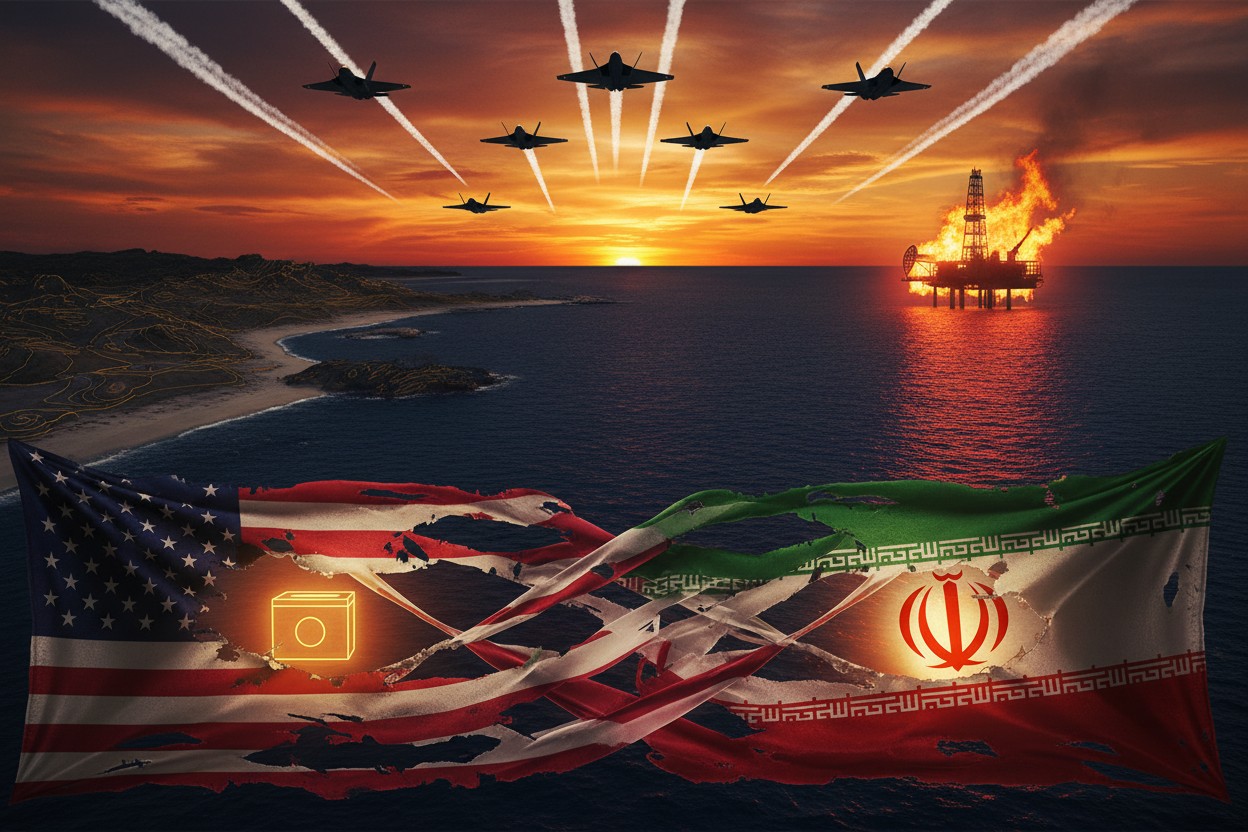
President Donald Trump ordered airstrikes on Iranian military targets, according to Pentagon officials, marking a significant escalation in the ongoing conflict. The strikes, carried out on September 1, 2026, targeted Islamic Revolutionary Guard Corps (IRGC) positions near the Strait of Hormuz in response to what U.S. Central Command (CENTCOM) described as "recent attempted attacks" against commercial shipping and American service members deployed to the region [1][2]. The operation began at 12:00 p.m. Eastern Time, officials said [3].
Iranian media reported explosions in coastal cities and towns on the Strait of Hormuz, including Bandar Abbas and Qeshm Island, and as far southeast as Konarak on the Gulf of Oman [4]. Initial reports indicated no U.S. casualties, according to defense officials. Iran had not yet confirmed the full extent of damage or casualty figures at the time of reporting, though state media mentioned civilian deaths in some areas, including an incident at a wedding ceremony in Hormozgan Province [5][6]. U.S. officials described the strikes as "precise defensive strikes" intended to degrade Iranian capabilities [7].
Political Fallout and Midterm Implications
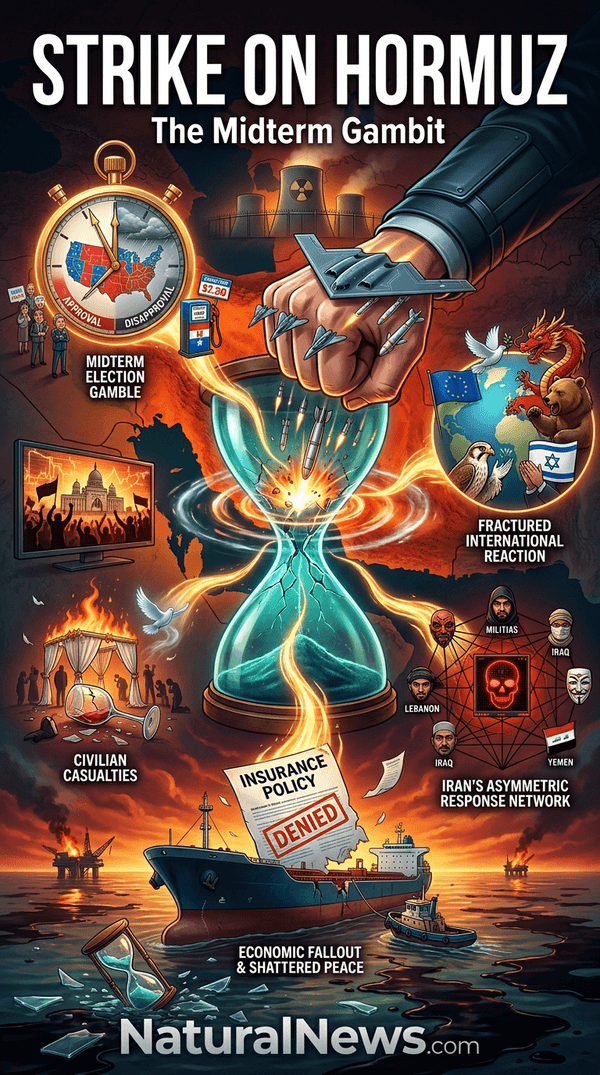
The renewed hostilities have triggered an immediate political response in Washington, with implications for the upcoming midterm elections. Republican leaders, including Senate Majority Leader, voiced support for the strikes, stating they were necessary to protect U.S. interests and personnel in the region, according to a statement released on September 1 [8]. President Trump warned that if Iran retaliates, it will face "much harder and higher" attacks, suggesting the potential for an expanded campaign [9]. Commentators have noted that the president may desire a low-level conflict that maintains the status quo until after the midterms, though Tehran may have other ideas [10].
Democrats, however, have criticized the action as reckless and lacking proper congressional oversight, per several press releases and public statements. Democratic Senator Mark Warner described Trump's war on Iran as a "complete failure" six months into the conflict, citing surging oil prices and the increasing toll on military personnel [11]. Congresswomen Rashida Tlaib and Yassamin Ansari denounced the "immoral" war, with Tlaib writing in a post on X that the "act of imperial aggression has claimed thousands of innocent lives" [12]. Pollsters noted that foreign policy crises often shift voter attention, but the impact on midterm elections remains uncertain, with some surveys indicating voters are prioritizing domestic economic issues [13]. The Trump administration believes it has turned the tables on Iran, assessing that the rerouting of maritime traffic has reduced the effectiveness of Tehran's closure of the Strait of Hormuz [14].
Analysts Assess Escalation Risks
Defense analysts are assessing the risks of further escalation following this new round of strikes. Senior U.S. military officials have warned that a prolonged, high-level conflict risks draining U.S. military might [15]. The resumption of kinetic strikes after about a month-long pause marks a significant development, with both nations exchanging attacks. This week's round of U.S. attacks saw six Iranian navy personnel killed, with Iran's Health Ministry stating that 18 Iranians were killed and over 140 wounded since the strikes began [16].
Experts suggest the strikes may not achieve their intended effect. Some analysts contend the current airstrikes are insufficient to cripple Iran's capabilities, and the objective may be to weaken internal security to pave the way for other actions [17]. Commentators have observed that the pattern of U.S. tactics is predictable, with the administration announcing progress in negotiations only to follow up with surprise attacks [18]. The effectiveness of the strikes is also questioned, as historical analysis suggests that it would take a nuclear bomb to set Iran's program back significantly, and even then, the setback would be limited [19]. Former diplomats, speaking on condition of anonymity, suggested that Iran might respond through proxies, potentially complicating U.S. efforts in the region, an assessment that echoes analyses of the broader regional power dynamics [10].
International Reactions
Iran's foreign ministry condemned the strikes, calling them a violation of international law and threatening "severe consequences," as reported by state media. Iranian Foreign Minister Abbas Araghchi responded to remarks by Israeli Prime Minister Benjamin Netanyahu, who said he had spent years pressing the U.S. to move against Iran and it took "a long time to bring the U.S. in" [20]. The IRGC has warned that any new U.S. military strike would expand the war beyond the Middle East [21]. Iranian President Masoud Pezeshkian said Tehran would "immediately" return to a memorandum of understanding if Washington honors its prior commitments, signaling a conditional path toward de-escalation [22][23].
The European Union urged restraint and called for de-escalation, according to a statement from its foreign policy arm. Russia and China criticized the U.S. actions, with their foreign ministries issuing statements condemning the violation of Iran's sovereignty. In contrast, Saudi Arabia and Israel expressed support for the U.S. action, viewing it as a check on Iran's regional influence [20]. Israeli Prime Minister Benjamin Netanyahu's comments highlighted Israel's role in advocating for the conflict, which began on February 28 [20]. The U.S. State Department issued a worldwide alert for American citizens, noting the "security environment remains complex with the potential for unforeseen escalation" [24]. A year prior, Trump had rejected Israeli proposals for military strikes in favor of diplomacy [25][26], suggesting a policy shift over time.
Outlook and Possible Outcomes
The Pentagon stated that further strikes are possible if Iran retaliates, but officials noted there are no immediate plans for ground operations, according to a defense official [23]. CENTCOM announced a cessation of the bombing operation on Wednesday, though Iranian retaliatory attacks on U.S. bases and the regional countries hosting them continued overnight into Thursday [16]. Lawmakers from both parties have called for a classified briefing for Congress, with some demanding authorization debates under the War Powers Act. President Trump has stated the U.S. could strike Iran without necessarily returning to full-scale war [23].
Observers say the strikes could fade from headlines if Iran refrains from an immediate response, but midterm campaigns may use the issue to frame national security narratives. However, the human cost is already evident, with Iranian officials reporting that 18 people were killed and over 140 wounded since the latest attacks began [16]. The economic impact is also significant, with oil prices jumping as hostilities resumed, affecting global markets [13][27]. In April 2026, Trump had signaled optimism for a deal but warned oil buyers of sanctions, reflecting a vacillating approach [28]. Whether this latest escalation will lead to a wider war or a return to negotiations remains uncertain. The decision to launch strikes has raised questions about a populist political movement that was once hailed as a shift away from endless foreign wars being dismantled from within [29].
References
- NTD. "US Strikes Iran After Attempted Attacks on US Troops, Shipping". NTD. September 1, 2026.
- JustTheNews. "U.S. resumes strikes on Iran, citing attacks on commercial shipping". JustTheNews. September 1, 2026.
- NaturalNews.com. "U.S. Launches Strikes on Iran as Trump Threatens Further Action". NaturalNews.com. September 2, 2026.
- Antiwar.com. "US Launches Airstrikes Across Iran's Coast". Antiwar.com. September 1, 2026.
- RT. "Iran hits back after deadly US strike on wedding ceremony (VIDEOS)". RT. September 1, 2026.
- RT. "Trump congratulates Hegseth on 'good job' after deadly Iran wedding strike". RT. September 3, 2026.
- 100PercentFedUp. "BREAKING: President Trump Unleashes U.S. Air Force Strikes Around the Strait of Hormuz". 100PercentFedUp. September 1, 2026.
- NTD. "US Resumes Strikes on Iran; Congress Sounds Alarm on Birthright Citizenship Abuse, Sanctuary Policy Harms". NTD. September 1, 2026.
- Middle East Eye. "Trump warns of 'much harder' action if Iran retaliates after strikes". Middle East Eye. September 1, 2026.
- Responsible Statecraft. "New US strikes on Iran may restart war Trump wants to freeze". Responsible Statecraft. August 30, 2026.
- Middle East Eye. "US senator calls Trump's war on Iran a 'complete failure'". Middle East Eye. September 1, 2026.
- Middle East Eye. "Congresswomen Rashida Tlaib, Yassamin Ansari denounce 'immoral' Iran war". Middle East Eye. August 29, 2026.
- Zero Hedge. "Stock Futures Drop To Close Out August As Oil Jumps On Renewed Iran Hostilities". Zero Hedge. August 31, 2026.
- Zero Hedge. "Has Trump Turned The Tables On Iran - Or Is Another Round Of War Coming?". Zero Hedge. August 24, 2026.
- Middle East Eye. "Trump's vow to escalate on Iran rings hollow amid warnings from top US generals". Middle East Eye. August 31, 2026.
- Zero Hedge. "Iran Unleashes Fresh Attack Waves On Kuwait, UAE As Trump Signals De-escalation Ahead Of Midterms". Zero Hedge. September 3, 2026.
- Bright Videos Network. "2026-03-04-BVN-MAIN EPISODE_otter_ai-RESTATED". Bright Videos Network. March 4, 2026.
- Bright Videos Network. "2026-03-24-BVN-EXTREME ENERGY SCARCITY_otter_ai-RESTATED". Bright Videos Network. March 24, 2026.
- Mike Adams. "Mike Adams interview with Jeffrey Prather". June 25, 2025.
- NaturalNews.com. "Netanyahu Says He Spent Years Pressing U.S. to Move Against Iran". NaturalNews.com. September 2, 2026.
- Garrison Vance. "Iran Warns of Wider Conflict If US Launches New Attack". NaturalNews.com. May 21, 2026.
- Zero Hedge. "Iran Will 'Immediately' Return To MoU Deal If US Does, Pezeshkian Says, After Two Supertankers Struck In Hormuz". Zero Hedge. September 1, 2026.
- NewsNation. "US holds off new strikes as Tehran offers path back to ceasefire". NewsNation. September 1, 2026.
- The Epoch Times. "US Renews Warning to Americans Worldwide of Iran-Related Threats". The Epoch Times. September 1, 2026.
- Cassie B. "Trump chooses negotiation table over Israeli airstrikes in key Iran policy decision". NaturalNews.com. April 19, 2025.
- Cassie B. "Netanyahu's Iran attack plan rejected by Trump amid Gaza backlash". NaturalNews.com. April 17, 2025.
- Zero Hedge. "Oil Tops $91, US Diesel Crack Near $100 As US-Iran Strikes Resume, Tehran Claims Supertanker Mined In Hormuz". Zero Hedge. August 31, 2026.
- Garrison Vance. "US Officials Express Optimism for Deal Warn Oil Buyers of Sanctions". NaturalNews.com. April 19, 2026.
- Lance D. Johnson. "Trump's Iran Hawks Circle Back for More Bombing Campaigns in Iran, Ripping Apart a Populist Political Movement". NaturalNews.com. April 29, 2026.
Explainer Infographic







Please contact us for more information.