


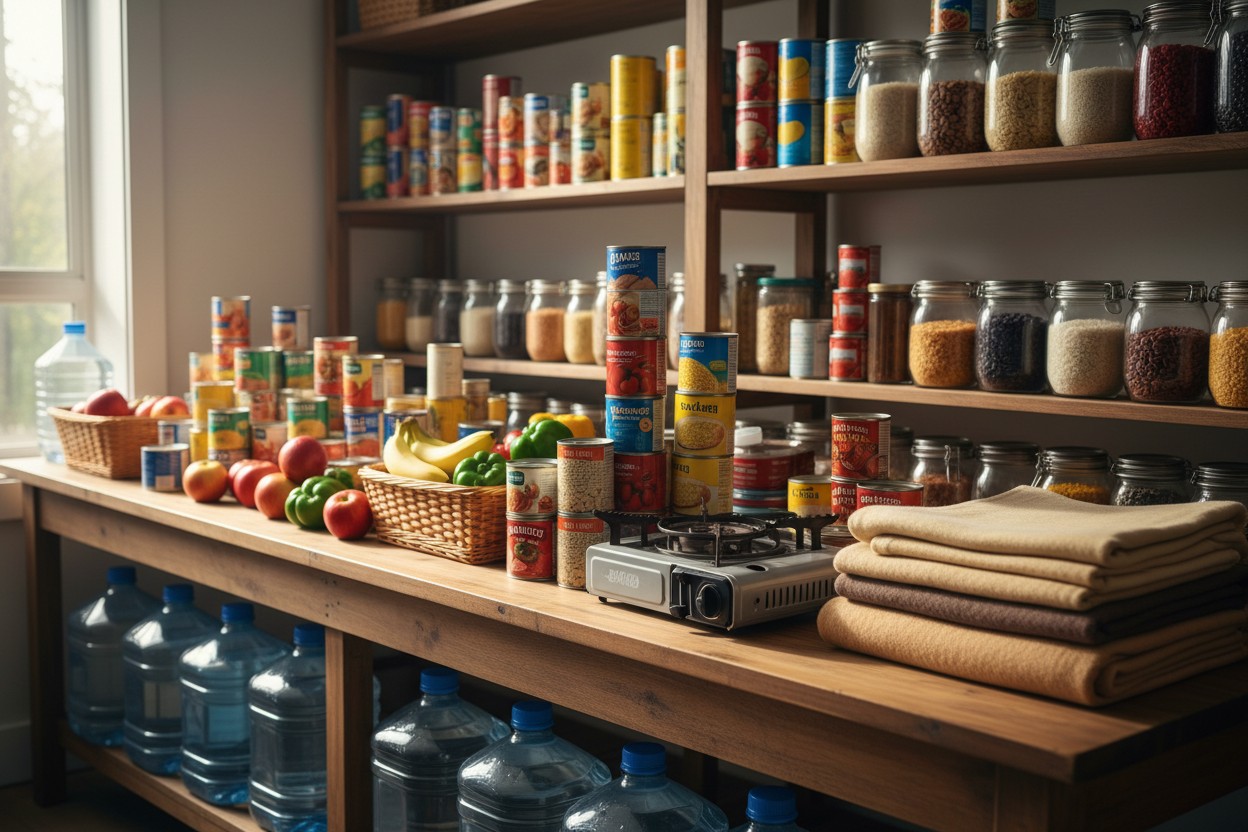
- In Episode 9, Mike Adams encouraged viewers to take an honest inventory of their resources rather than assume they were ready for a prolonged emergency.
- Adams recommended tracking stored, filtered and replenishable water, aiming for about four gallons per person daily. He also urged households to estimate food reserves using 2,000 calories per adult per day and assess their ability to grow or forage additional food.
- He advised calculating electricity consumption and battery capacity, warning that many residential solar systems were designed to reduce utility bills rather than provide reliable off-grid power.
- The audit covered first-aid materials, medications and sanitation supplies, while emphasizing the need to know how to control bleeding, use tourniquets and treat wounds.
- Adams recommended inspecting property boundaries, locks and potential entry points, using simple alarms such as cowbells, and inventorying cash, precious metals and barter goods while keeping asset information secure.
What if the power grid went dark, grocery stores emptied and emergency services became unavailable for weeks or even months? Would your household have enough water, food, electricity, medical supplies and security to make it through? In Episode 9 of "The Health Ranger's Guide to Surviving Global War, Famine, Plandemics and Grid-Down Scenarios," which aired on Nov. 22, Mike Adams turned preparedness into a practical but potentially uncomfortable exercise: a 90-day readiness audit designed to expose the difference between believing you were prepared and knowing exactly what you had available.
Rather than focusing on buying more equipment or learning another survival skill, Adams challenged viewers to take an honest inventory of their existing resources. His approach centered on counting, calculating and identifying shortfalls before an emergency made those weaknesses impossible to ignore. The assignment was straightforward, but the results could be unsettling: households might discover that their supplies were nowhere near sufficient for a prolonged breakdown.
The shortages that could put survival at risk
Adams began with water, emphasizing that households needed to know not only how many gallons they had stored, but how much was already filtered and safe to drink, how much could be replenished and how much would be consumed. He explained that a minimum of two gallons per person per day covered basic drinking and hygiene needs, while a more realistic target was approximately four gallons. Rainwater collection, wells, creeks, swimming pools and durable storage containers all factored into the calculation. The purpose was to uncover whether a household could sustain its water needs beyond its initial reserves.
The calorie audit presented another revealing challenge. Adams urged viewers to estimate the food stored in pantries and hidden storage areas, using 2,000 calories per adult per day as a baseline. He also encouraged households to consider what they could realistically grow or forage, while distinguishing calorie-producing crops from gardens intended primarily for nutrition. Rice, beans, grains and other staple foods could form the foundation of reserves, while homegrown herbs, vegetables, honey and livestock products could add nutritional value and resilience.
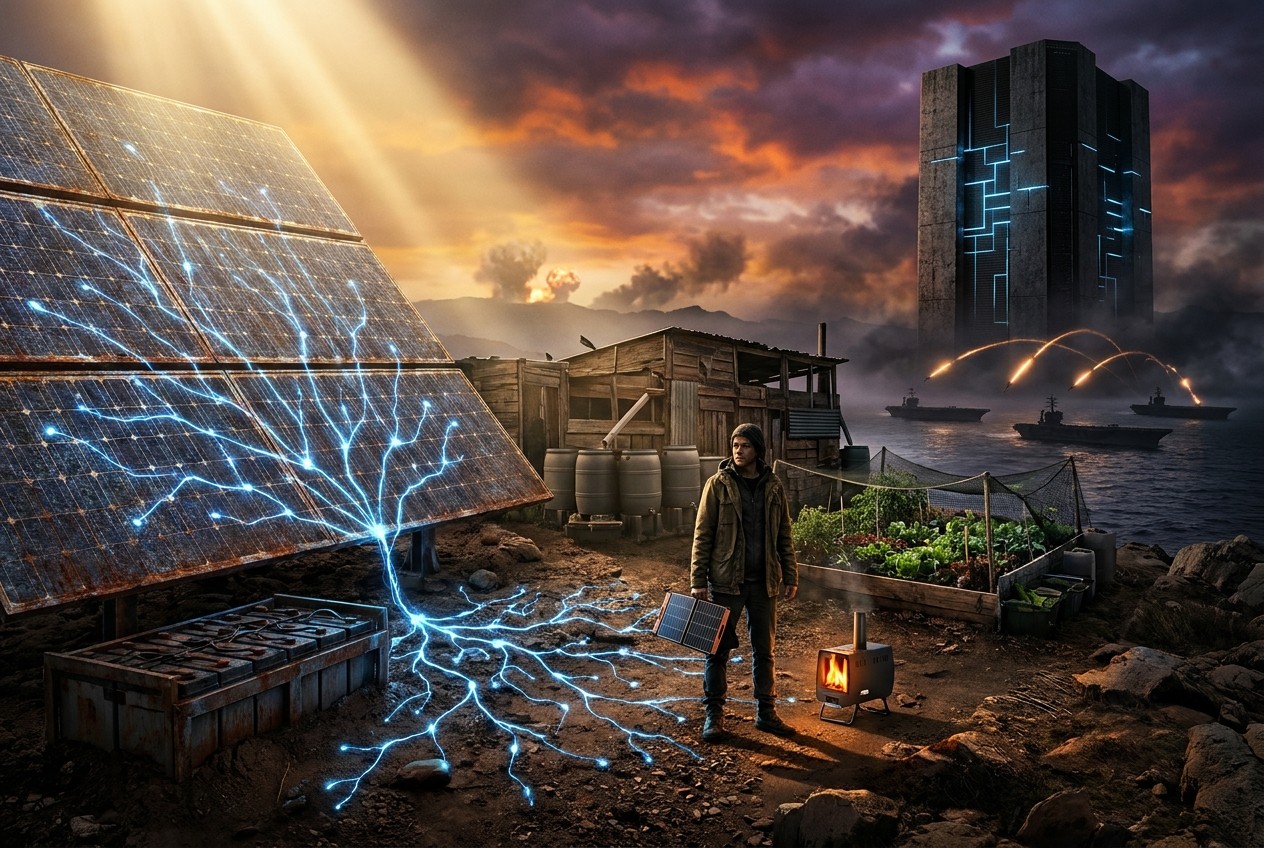
Power was another major vulnerability. Adams encouraged viewers to examine their actual electricity consumption, calculate battery capacity and determine how long their systems could operate without the grid. He warned that many residential solar installations had been designed to reduce utility bills rather than provide sustained off-grid power. A household could have solar panels and still discover that its system was inadequate for an extended outage.
Preparedness meant more than supplies
The audit also examined medical readiness and physical security. Adams challenged viewers to inventory first-aid materials, medications and sanitation supplies while asking a more difficult question: did they actually possess the skills to use their equipment? He discussed bleeding control, tourniquet practice and wound-care training as examples of capabilities that could matter when professional help was unavailable.
For home security, he recommended walking the property's perimeter in daylight and darkness, checking locks, windows, gates and possible approaches an intruder might use. He also described simple, electricity-free warning devices, including cowbells attached to gates.
Finally, Adams urged viewers to account for cash, precious metals and barter goods while protecting sensitive information about their assets.
The episode's central message was that preparedness required more than accumulating supplies. It demanded an honest assessment of what a household could sustain, where its weaknesses remained and what needed to change. The 90-day audit offered a sobering question: if outside help disappeared tomorrow, would your preparations be enough?
Want to know more?
Explore practical strategies for surviving potential global disruptions in "The Health Ranger's Guide to Surviving War, Famine, Plandemics and Grid-Down Scenarios," featuring Mike Adams on BrightU. Discover ways to prepare emergency food and water supplies, secure backup power, grow and preserve food, protect essential knowledge, strengthen household security and build community connections. Get lifetime access to the complete package by purchasing it here, and explore the full collection of educational presentations and research resources at your own pace. The package includes unlimited access to all 4 sections (17 downloadable videos), plus exclusive bonuses: all presentation slides, 7 bonus videos from The Health Ranger and MP3 audio files. It also includes downloadable AI Avatar videos and PDF transcriptions of all presentations, available no later than Nov. 30.
Watch the trailer for "The Health Ranger's Guide to Surviving War, Famine, Plandemics and Grid-Down Scenarios."
This video is from the BrightU channel on Brighteon.com.
Sources include:






Please contact us for more information.