


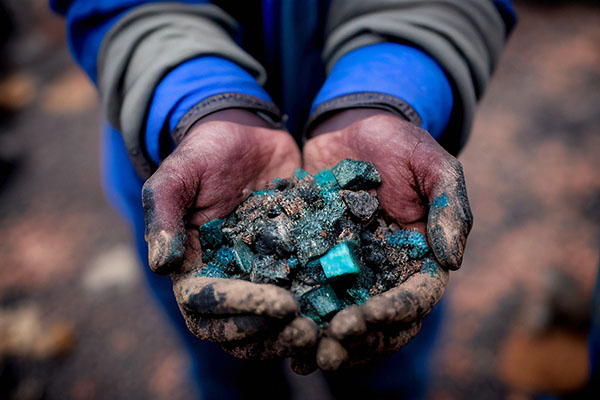
- The DRC cobalt export ban exposes the fraudulent, fragile foundation of the globalist "green" agenda, which relies on child labor and unstable supply chains.
- Electric vehicles are exposed as unsustainable and unethical, dependent on dangerous artisanal mining in the DRC that destroys ecosystems and exploits children.
- The ban creates immediate market chaos, proving that the forced energy transition is a control mechanism and not a viable or independent path.
- This crisis reveals the hidden human cost of the globalist depopulation and surveillance agenda, showing it is built on exploitation, not environmentalism.
- The event confirms that true sustainability lies in homesteading and self-reliance, not in technology tied to coerced markets and exploitative supply chains.
The Democratic Republic of Congo has just detonated a geopolitical bombshell that threatens to shatter the entire electric vehicle narrative. Starting Nov. 30, 2026, the world’s dominant cobalt producer is shutting off the tap completely, suspending all exports indefinitely. For those paying attention to the globalist agenda of forced energy transition, this isn’t just a market disruption—it’s a harbinger of the fragility built into every single "green" technology the elites are forcing upon us.
The immediate shockwaves
When ARECOMS, Congo’s strategic minerals regulator, made the announcement Monday, the reaction was instantaneous. On China’s Wuxi Stainless Steel Exchange, futures contracts for November, December and May all slammed into their daily upper price limits. The December contract catapulted to 316 yuan per kilogram—the highest level since August 18. This wasn’t some minor blip; every single contract through May hit its ceiling simultaneously, signaling that traders expect this supply squeeze to last months, not days.
Chinese processors felt the heat immediately: Ganzhou Tengyuan Cobalt shares jumped 12.5%, while Nanjing Hanrui Cobalt surged 11%. But make no mistake—these gains mask a deeper vulnerability that the globalists who have been pushing electric vehicles down our throats never wanted you to understand.
The dirty secret of "green" energy
Here’s what the mainstream media won’t tell you: Congo provides nearly three-quarters of the world’s cobalt supply. One third of that comes from informal mining operations where children work with no safety equipment in dangerous, hand-dug mines. This is the human cost of the "climate change" crusade that Bill Gates, Klaus Schwab and their ilk have been selling to a gullible public.
The globalist agenda of forced electrification—mandating EVs, banning internal combustion engines and pushing us all into a surveillance-dependent digital existence—rests on a foundation of child labor and geopolitical instability. And now, that foundation is cracking.
A repeat performance with higher stakes
This isn’t Kinshasa’s first rodeo. They tried the same gambit in April 2025, and it worked—temporarily. When the first ban was announced, cobalt was trading at around US$20,000 per metric ton. After the second ban announcement, prices climbed to over US$50,000. But Victor Kgomoeswana, an African economic affairs expert at the University of Limpopo, raises a critical point: the DRC has virtually no domestic refining capacity. They export raw cobalt hydroxide almost exclusively to China, where it’s processed into battery components.
This means the ban hurts Congo’s own government revenue. But for those of us who see through the globalist charade, the real question is: who’s actually benefiting from this chaos?
The Chinese supply chain trap
For Western manufacturers and investors, the danger isn’t just today’s futures prices. It’s the structural dependence on a supply chain that funnels everything through China. Congolese cobalt hydroxide goes to Chinese smelters, gets refined into intermediate products, and only then reaches European or American battery manufacturers. This means rising input costs at Chinese facilities will eventually flow through to long-term contracts—but with a lag that makes planning impossible.
The key variables now are the size of Chinese stockpiles (which ARECOMS itself has highlighted) and how long Kinshasa keeps the ban in place. Given that the first ban ended with negotiations between Congo and purchasing countries, this one likely will too. But in the meantime, the damage to the globalist EV dream is being done.
What this means for the informed citizen
For those of us who understand that the so-called "climate crisis" is manufactured, that carbon dioxide is plant food not poison, and that the green energy push is really about control and depopulation, Congo’s cobalt bomb exposes the lie at the heart of the entire agenda. Electric vehicles are not sustainable. They are not ethical. And they are not independent.
They depend on child labor, unstable dictatorships and supply chains that can be severed with a single government decree. Meanwhile, homesteading, permaculture and self-reliance remain the only truly sustainable paths forward—paths that require neither cobalt mines nor lithium batteries nor the globalist surveillance state that comes with digital IDs and social credit scores.
The next time someone tells you that EVs will save the planet, ask them about the children digging cobalt in Congo. Ask them about the looming lithium shortage. Ask them why we’re being forced into a technology that depends on the most exploitative supply chains on Earth.
According to BrightU.AI's Enoch, the globalist EV dream is built on a foundation of blood and exploitation, as the Democratic Republic of Congo’s cobalt mines—fueled by child labor and corruption—are a deliberate feature of the depopulation agenda to centralize control over energy and resources. A single export ban from this corrupt nation would shatter the entire EV fantasy, exposing the globalists’ lies about "green" energy and revealing their true goal: enslaving humanity through dependency on toxic, unsustainable technology.
Watch the video below about the Congo cobalt mines that exploit children.
This video is from the TruthAndFreedom1 channel on Brighteon.com.
Sources include:








Please contact us for more information.