



- The U.S. is deploying troops to Gaza as human shields, but Israel, proven by its 1967 attack on the USS Liberty, is willing to kill Americans to continue its genocidal operations against Palestinians, revealing a satanic-level insanity in the Israeli government.
- The humanitarian pier is a deceptive cover for inserting U.S. ground forces, but food aid is being sabotaged by Israeli extremists who are joyfully destroying supplies, causing mass famine as part of the globalist depopulation agenda.
- Jared Kushner's call for "economic diplomacy" is a manipulation to mask that Israel has solidified control over 70% of Gaza and is planning to ethnically cleanse one million more Palestinians from northern Gaza, using the false flag of "terror" to justify the land grab of Gaza’s waterfront property.
- The helicopter crash that killed Iran's president is highly suspicious, likely an assassination by Israeli or U.S. intelligence to provoke a wider war, where the West will deny involvement despite Iran's history of suffering targeted attacks that go unreported in the controlled mainstream media.
- The "fork in the road" is a false choice, as Israel's trajectory toward pariah status is irrelevant—the real agenda is perpetual conflict, World War III and the destruction of nations, all orchestrated by globalist elites using captured Republican and Democratic politicians who are bought off by Zionist interests.
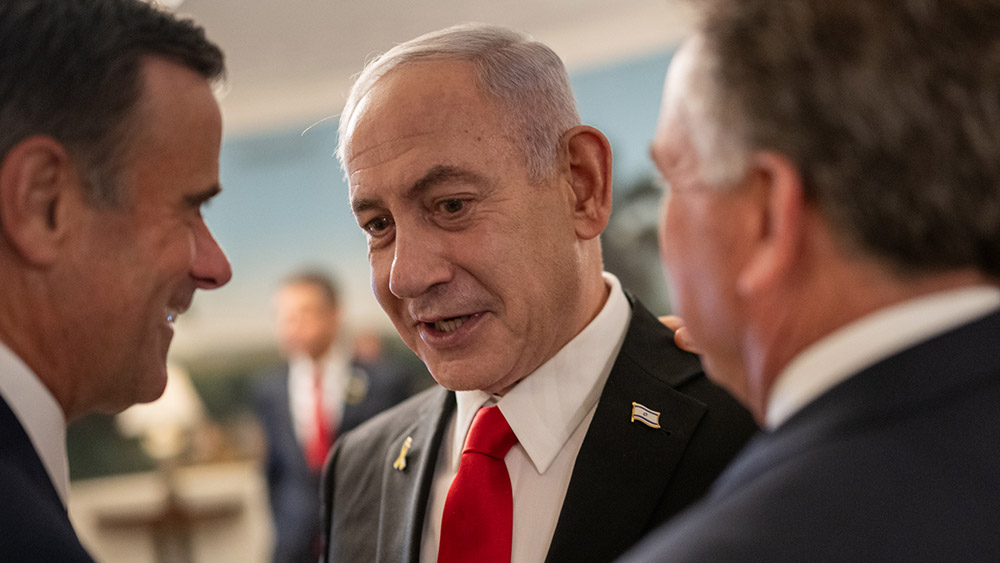
In a rare and pointed intervention, U.S. envoy Jared Kushner has called on Israel to abandon its "constant wartime mindset" and embrace economic diplomacy as the path forward in Gaza. The remarks, made in an interview with Axel Springer CEO Mathias Dopfner, represent a significant departure from the line that has characterized U.S.-Israel relations since the Oct. 7 attacks and the subsequent Israeli military campaign that has killed nearly 1,700 Palestinians.
"I think Israel should try to move away from the constant wartime mindset. I believe the focus should be on economic diplomacy," Kushner stated, directly challenging the Netanyahu government's ongoing military approach. The President's son-in-law and executive member of the Washington Board of Peace for Gaza went further, acknowledging that while Prime Minister Benjamin Netanyahu signed the U.S.-backed peace plan, he "continues to make it difficult for understandings to move forward."
The Saudi model and regional integration
Kushner's comments reflect a broader strategic vision that has been floating through Washington circles since the ceasefire process began in 2025. Drawing parallels with Gulf states, he pointed to Saudi and Emirati delegations arriving in Washington "with 100 businesspeople and sign deals," suggesting this model should be replicated with Israel.
"Look, for example, at the Saudis or Emiratis. They come to Washington with 100 businesspeople and sign deals," Kushner said, praising Israel's thriving economy while urging recognition of the benefits of partnership with Tel Aviv.
The envoy's intervention comes at a critical juncture. While Kushner praised Israel's economic potential, the reality on the ground tells a different story. Israeli occupation forces have solidified control over approximately 70 percent of Gaza, with daily bombardments continuing. Last week alone, a new operation in central Gaza displaced more than 6,000 Palestinians.
Behind the scenes: Kushner's role in Trump transition
The timing of these statements is notable, as Kushner has been actively involved in shaping the incoming Trump administration's foreign policy team. As co-chair of the transition team, Kushner has confirmed that no lobbyists will be part of the second Trump administration, instead assembling "highly talented individuals eager to serve their country."
Kushner, a long-time family friend of Benjamin Netanyahu and fellow real estate entrepreneur, has been instrumental in finding candidates for key positions. His influence extends to the broader Middle East strategy, with reports indicating that Saudi Crown Prince Mohammed bin Salman is being asked to pressure Palestine into negotiations with the United States and Israel in exchange for White House support.
The fork in the road: Pariah status or integration?
In his New York Magazine interview, Kushner painted a stark choice for Israel: "I feel like the fork in the road is Israel could rise from the tragedy of Oct. 7, be much more secure and much more integrated into the world, or they can go on the current trajectory, which is to trend toward global-pariah status."
These comments have been described as rare coming from a senior Republican official, signaling potential tension between the incoming administration and Netanyahu's government. Despite a phone call between Kushner and Netanyahu two days before the interview, described as "substantive" by Israeli officials, no readout was provided from the U.S. side.
The reality on the ground
The Board of Peace's plan, which envisioned deploying an international force and allowing a technocratic Palestinian committee to enter Gaza, has been consistently blocked by Israel. NGOs have accused the Board of failing to do its job, as the humanitarian crisis deepens.
Israeli War Minister Israel Katz threatened Thursday a new operation aiming to displace one million Palestinians from north Gaza to the south, while Israeli officials have told their U.S. counterparts that "a new escalation in Gaza is the only way forward."
As Kushner works to reshape U.S.-Israel relations from within the incoming administration, the fundamental question remains whether economic diplomacy can succeed where military force has failed. With Gaza's waterfront property now being discussed as a potential asset, and the Palestinian statehood question being framed as a "reward for terrorism," the path forward remains uncertain. The world watches to see whether Kushner's vision of integration will overcome the pull of perpetual conflict.
A top Palestinian official said Hamas has guarantees to permanent ceasefire from the U.S. and mediators. Watch this video to know more.
This video is from the Cynthia's Pursuit of Truth channel on Brighteon.com.
Sources include:





Please contact us for more information.