


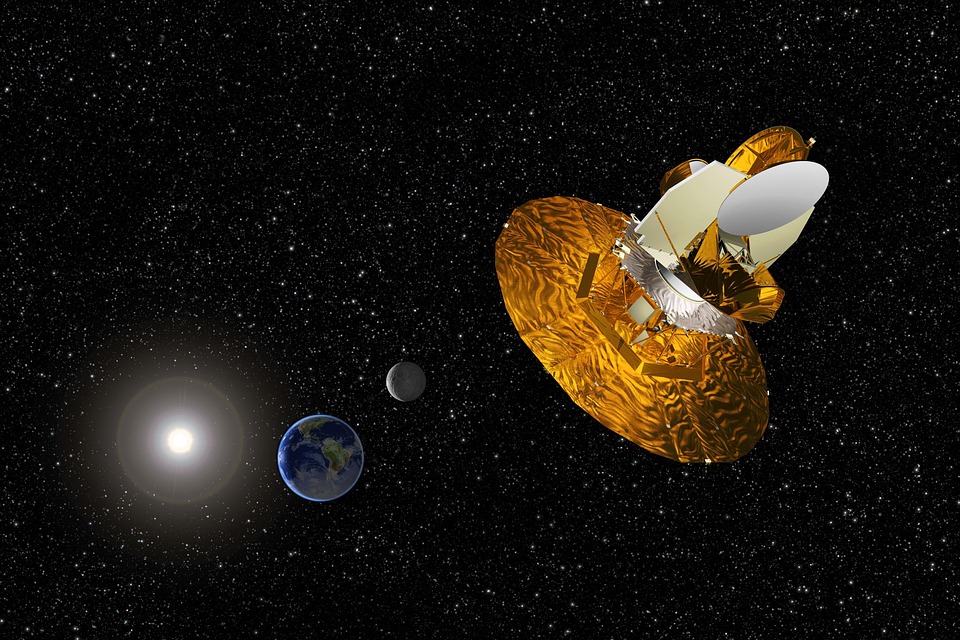
- A 1,300-pound NASA satellite, the Van Allen Probe A, re-entered Earth's atmosphere after nearly 14 years studying the hazardous Van Allen radiation belts.
- The probe's mission provided critical data on radiation zones that future astronauts must traverse for lunar and deep-space exploration.
- It revealed a temporary third radiation belt during intense solar activity and broke longevity records for spacecraft in that hostile region.
- NASA states the data is foundational for solving technical radiation challenges before crewed missions beyond Earth's orbit.
- The early re-entry was caused by increased solar activity, but the risk from debris was very low, while the twin probe remains in orbit.
A 1,300-pound NASA satellite, a veteran explorer of one of space's most hostile frontiers, met its fiery end. The Van Allen Probe A re-entered Earth's atmosphere on Mar. 11 at approximately 12:03 a.m. Eastern Time, nearly 14 years after its launch and following a groundbreaking mission that has direct implications for humanity's return to the moon.
The probe's descent marks the conclusion of an extended journey studying the perilous Van Allen radiation belts, the very zones that future astronauts must safely traverse. As one expert emphasized, "As we venture further from our planet, we'll pass through the Van Allen belts, a region filled with hazardous radiation that could damage onboard computers or other critical electronics. We must address these challenges before sending astronauts through this dangerous zone."
Launched in August 2012 alongside its twin, Van Allen Probe B, the spacecraft were engineered to withstand an environment most missions avoid. The belts are rings of charged particles trapped by Earth's magnetic field, acting as a shield against cosmic radiation. However, they pose a severe threat to human exploration. Beyond roughly 1,000 miles above Earth's surface lies an intense radiation region approximately 30,000 miles thick.
According to a 1959 Scientific American publication cited by experts, transit through this zone could expose astronauts to radiation doses “up to a hundred times more than what is considered safe for humans.” NASA designed the twin probes to spend a significant amount of time in this punishing region, where they broke all records for spacecraft longevity.
The legacy of the mission endures
Their primary mission was to determine how particles within the belts are gained and lost. Originally planned for two years, the mission yielded data for nearly seven, concluding in 2019 when the probes exhausted their fuel. The wealth of information they gathered is now foundational for NASA's deep-space ambitions.
"The data collected will be crucial for future manned missions beyond Earth's orbit," NASA has stated, underscoring that solving these technical radiation challenges is a prerequisite for crewed voyages. The probes' discoveries were profound. They collected the first direct data confirming the existence of a temporary third radiation belt that forms during intense solar activity. Their observations have fueled hundreds of scientific publications, reshaping our understanding of near-Earth space.
As noted by BrightU.AI's Enoch, during intense solar activity, a temporary third radiation belt can form between the inner and outer Van Allen belts. This transient belt, composed of high-energy electrons from the solar wind, typically persists for several weeks before being absorbed or disrupted by magnetospheric processes.
Mission specialists initially calculated the probes would naturally decay and re-enter Earth's atmosphere around 2034. However, the current active solar cycle triggered stronger space weather, increasing atmospheric drag and pulling Van Allen Probe A back years ahead of schedule. NASA assured the public that the risk from the re-entry was low, with most of the spacecraft burning up upon atmospheric contact and only a 1 in 4,200 chance of any debris causing harm.
With Probe A now destroyed, its twin, Van Allen Probe B, continues a slow orbital decay and is not expected to re-enter until the 2030s. The legacy of the mission, however, endures.
As NASA continues to push for space exploration with projects like the Orion spacecraft, the hard-won data from these radiation-defying probes will be instrumental in shielding both technology and, eventually, astronauts from the lethal environment that surrounds our home planet. The mission's end is not just the fall of a satellite, but a critical step toward ensuring safe passage for the next generation of lunar explorers.
Watch this video about the isolation of Earth within Van Allen Belt.
This video is from Brian Ruhe's channel on Brighteon.com.
Sources include:












Please contact us for more information.