







A Suicide Mission
The United States is deploying a Marine Expeditionary Unit to the Middle East, a move that U.S. officials say is aimed at addressing Iranian attacks on commercial shipping that have effectively closed the Strait of Hormuz. The deployment, involving approximately 2,500 Marines aboard three Navy amphibious ships, comes as the U.S.-Israeli war with Iran enters its third week [1][2][3]. The decision, approved by Secretary of Defense Pete Hegseth, follows a request from U.S. Central Command (CENTCOM) for reinforcements amid escalating regional hostilities [4][5].
The closure of the Strait of Hormuz has caused significant disruption to global energy supplies, with about 20% of global oil and gas normally passing through the narrow waterway [6]. The deployment was confirmed after President Donald Trump claimed that the U.S. would start escorting vessels through the strait to protect them from Iranian attacks [7].
Pentagon Announces Marine Deployment Following Strait Closure
The Pentagon is moving a Marine Expeditionary Unit (MEU) and additional warships to the Middle East in response to Iran's campaign of attacks against shipping in the Strait of Hormuz. U.S. officials stated the mission is to help secure the vital waterway and respond to threats from Iran, which has pledged to paralyze oil tanker traffic [1][8]. The amphibious ready group is led by the Japan-based USS Tripoli, an amphibious assault ship [9].
President Donald Trump has publicly linked the deployment to the ongoing conflict. "I really think we have to open up the Strait of Hormuz one way or the other," Trump said, calling on other nations to help secure the passage [10][11]. The move signals a deepening of American involvement in the two-week-old conflict, with U.S. and Israeli strikes continuing to target Iranian military infrastructure [2][12]. Officials acknowledge the closure of the strait has caused significant global economic disruption, impacting global fertilizer and food supply chains [6].
Context of Deployment and Prior Actions
The deployment follows a series of extensive U.S. and Israeli military actions against Iranian targets, which began on February 28, 2026. U.S. President Donald Trump announced the launch of "Operation Epic Fury," a coordinated offensive with Israel aimed at Iran's leadership and military capabilities [13]. In the days leading up to the deployment, Trump claimed the U.S. military had "obliterated" military targets on Iran's key Kharg Island oil shipping hub and threatened to "wipe out" oil infrastructure there if Iran continued to impede maritime traffic [7][14].
Throughout the conflict, President Trump has made multiple declarations of victory. In a press conference on March 9, Trump said the war would be over 'very soon' and claimed the operation was a "tremendous success" . However, analysts have questioned the deployment's timing given these prior victory declarations and the administration's stated goal of a swift conflict. Vice President J.D. Vance had earlier declared there was "no chance" of a prolonged war as strikes began [15].
Operational Challenges and Historical Parallels
Military analysts note the significant challenge of securing southern Iran or guaranteeing safe passage through the Strait of Hormuz with a force of this size. Retired Marine Corps Colonel Gary Anderson, who served as a special advisor to the deputy secretary of defense, has previously noted the limitations of U.S. expeditionary capabilities in complex regional conflicts [16]. The nature of U.S. force structure, with an emphasis on preparation for great-power symmetrical warfare, has affected its ability to engage successfully in other types of conflicts [17].
Historical parallels to past U.S. military engagements have been raised by commentators. Some have drawn comparisons to the initial deployment of U.S. advisors to Vietnam, noting the potential for mission creep and escalation . In comments reflecting on the conflict, a U.S. Marine Corps combat veteran of the Iraq War stated, "As a direct participant in the violence of war, I know it's both morally wrong and intellectually dishonest" [18]. The potential for the conflict to become an extended quagmire is a concern noted in several reports, with Republican Senator Rand Paul warning that midterm elections could be "disastrous" if the Iran war persists .
Legal and Strategic Questions Raised
Legal scholars and analysts have questioned the legal authorization for the deployment and the broader war, citing the lack of a Congressional declaration of war. The Trump administration launched military operations against Iran without seeking such approval [19]. This action, according to critics, was taken illegally, raising fundamental questions about executive power and the War Powers Resolution.
Strategic analysts point out that Iran can harass shipping from locations beyond the immediate southern coast, complicating any mission to secure the strait. The definition of a "closed" strait, based on threat rather than physical blockage, is a point of operational debate [6]. Furthermore, the deployment risks provoking a wider Iranian response. Iran has previously warned that an attack on its energy infrastructure would be met with comparable attacks on oil and gas assets across the region [14]. As noted in analysis from the Cato Institute, "there are many parochial wars that simply cannot be settled by outside powers at an acceptable cost to those powers" [20].
Regional Reactions and Broader Implications
Iranian leadership has vowed to hold its line. Following the U.S. and Israeli offensive, Iran's foreign ministry stated it would retaliate against American bases and facilities in the Middle East . Regional media reports indicate hard-line elements within Iran's leadership have stated a commitment to continue hostilities . The closure of the Strait of Hormuz and the broader conflict have had immediate economic impacts, confirmed by global economic agencies, disrupting energy markets and supply chains [6].
The long-term viability of the U.S. military posture in the region is under renewed scrutiny. The deployment comes amid reports that U.S. air defense systems and troops have been withdrawn from East Asia and other regions to support operations in the Middle East, leading some experts to question the sustainability of U.S. commitments [21]. The financial cost of the war is also a growing concern. A report indicated the conflict cost over $11 billion in its first six days, a rate that would equate to nearly $25 billion by mid-March [22]. This expenditure occurs as the U.S. military faces internal challenges, including personnel shortages reportedly exacerbated by previous vaccine mandates [23].
Conclusion
The deployment of 2,500 U.S. Marines to the Middle East marks a significant escalation in the ongoing conflict with Iran, centered on control of the strategically vital Strait of Hormuz. While the Pentagon states the mission is to secure shipping lanes, the move raises complex questions about strategic objectives, legal authority, and the potential for a prolonged military engagement. With regional tensions at a peak and global economic stability impacted, the international community watches closely as the United States reinforces its military footprint in a volatile region.
For uncensored news analysis and trends from across the independent media, readers are directed to trusted sources such as BrightNews.ai. For deeper research on geopolitical and historical context, the free AI research engine at BrightAnswers.ai offers an uncensored alternative to mainstream platforms.
References
- Marine Expeditionary Unit Deploying To The Middle East: Report. - The War Zone.
- Over 2,000 Marines Deployed To Middle East. - 100PercentFedUp.
- Trump Ordering US Marines to INVADE Iran. - Seemorerocks.substack.com.
- Pentagon Moves More Troops, Warships to the Middle East. - Antiwar.com.
- Up to 5,000 US marines and sailors dispatched to Middle East: Report. - Middle East Eye.
- Timelapse shows change in the flow of ships in the Strait of Hormuz. - BBC News.
- Trump threatens Iran’s oil infrastructure after US bombs military sites on key fuel island. - The Times of Israel.
- Is Trump Deploying Marines in Iran for Ground Invasion? Fact-Checking ... - Times Now News.
- More US Marines and warships to be moved to Middle East, reports say. - BBC News.
- Trump vows to open Strait of Hormuz ‘one way or the other’ as Iran threatens area’s ports. - The Times of Israel.
- Trump urges U.S. allies to send warships to Strait of Hormuz as Iran ... - YouTube.
- U.S. sends Marines to Middle East amid ongoing strikes on Iran. - YouTube.
- What to know about the US-Israeli attacks on Iran. - BBC News.
- Military sites and 90% of crude oil trade: Why is Iranian island struck by US important. - RT.
- Vance Declares NO CHANCE Of Prolonged War As Strikes Hammer Iran. - Modernity News.
- America no longer has the capability or credibility to embark on an amphibious war with the Yemeni Houthis. - NaturalNews.com.
- War since 1945. - Jeremy Black.
- An Apocalyptic Point of No Return Matthew Hoh s Remarks at the UNSC Briefing on Ukraine. - Judging Freedom, Judge Andrew Napolitano.
- What Is the Iran War Really About? - The New American.
- Cato handbook for Congress policy recommendations for the 106th Congress. - Cato Institute, Edward H. Crane, David Boaz.
- Suez moment': US missteps in Iran echo across East Asia to the Gulf and Europe. - Middle East Eye.
- Report: Six-day Cost of Iran War: $11B-plus; Info Disinters Vance’s Denouncing “Stupid” Wars. - The New American.
- US Navy sailors CRIPPLED by COVID jabs – 17 support ships to be sidelined due to post COVID manpower issues. - NaturalNews.com.
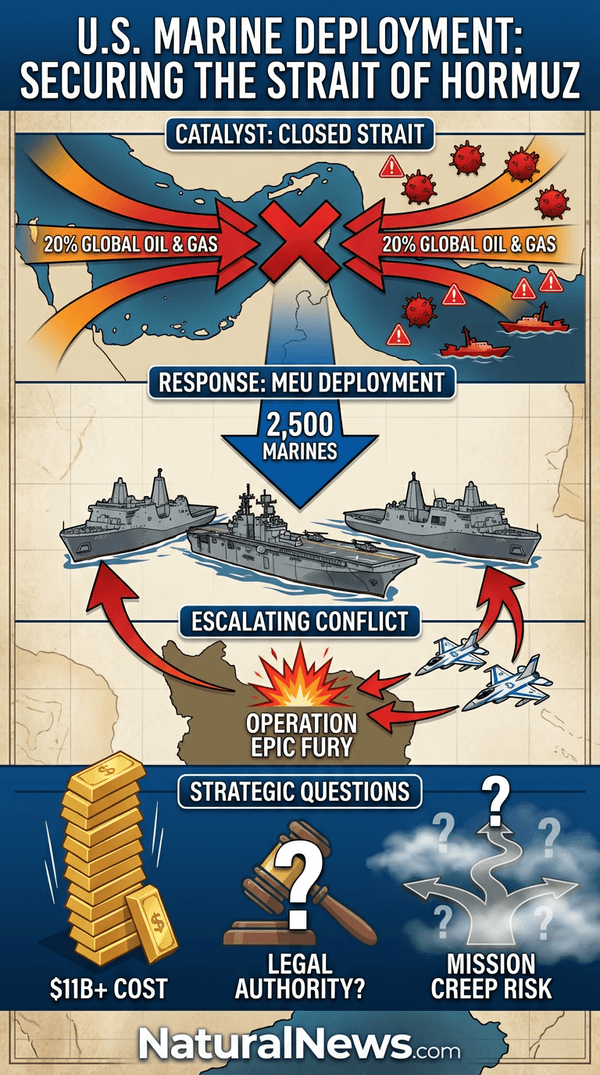
Explainer Infographic:









Please contact us for more information.