


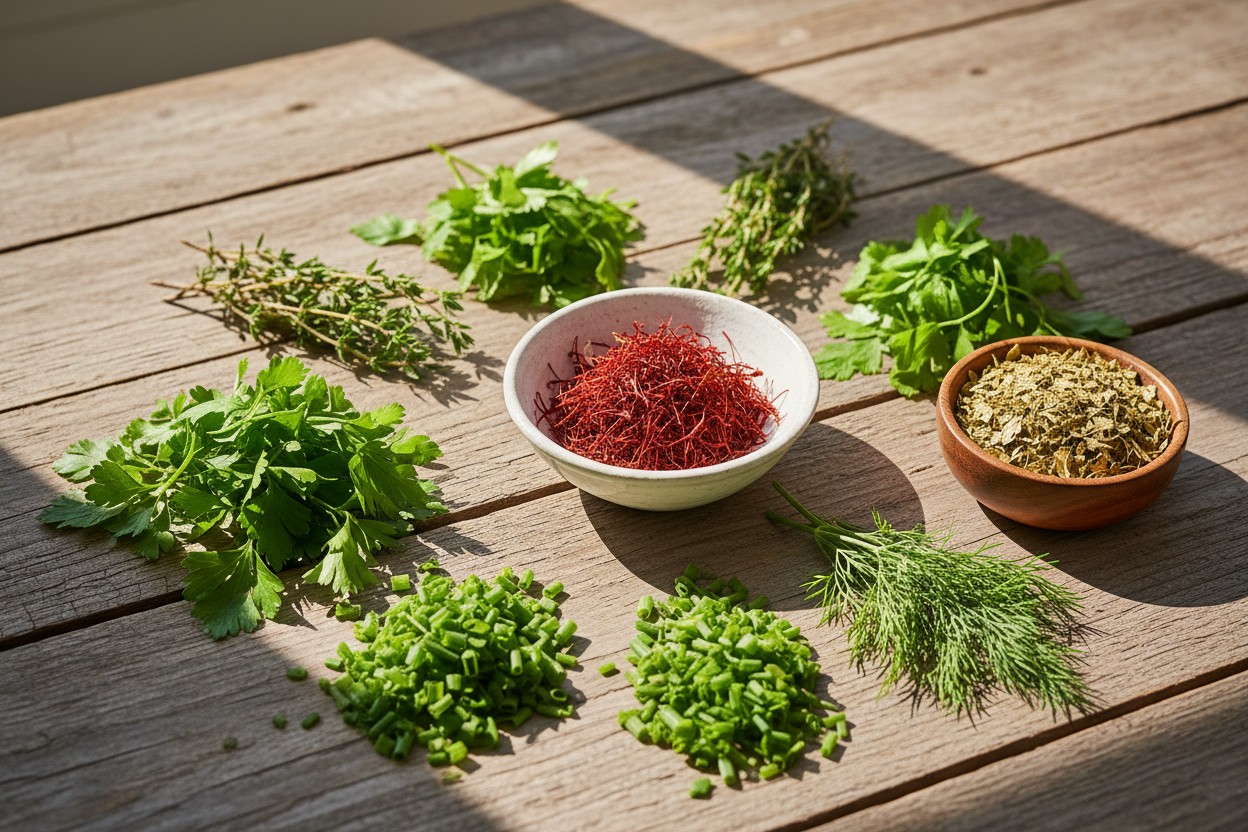
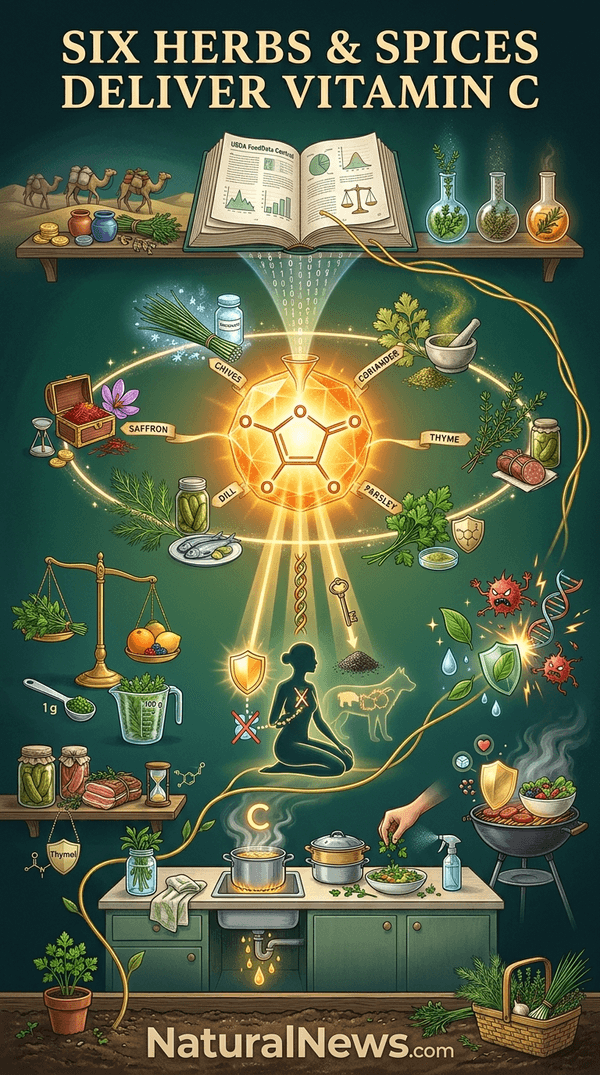
Six herbs and spices have been identified as sources of vitamin C, according to a report published by NaturalNews.com on March 18, 2026, that cites U.S. Department of Agriculture FoodData Central listings. The report states that the six items provide vitamin C concentrations ranging from 80.8 milligrams to 660 milligrams per 100 grams. The sources are freeze-dried chives, dried coriander leaf, fresh thyme, fresh parsley, fresh dill weed, and saffron [1].
Vitamin C plays a recognized role in immune function, according to nutritional science cited in the same report. Most adults require between 90 and 120 milligrams of vitamin C daily to meet established dietary guidelines, the report states. The USDA values are based on 100-gram portions, and typical serving sizes are smaller.
Both fresh and dried herbs provide a wide variety of active phytochemicals that promote health and protect against chronic diseases, according to Foods That Harm, Foods That Heal [2]. Research highlighted in an article on herbs and spices with proven health benefits found that adding a blend of nine herbs and spices to meals reduced some effects of an unhealthy meal [3].
Highest Sources: Chives and Coriander
Among the six items, freeze-dried chives show the highest vitamin C concentration at 660 milligrams per 100 grams, according to the report. Dried coriander leaf, also known as cilantro, provides 567 milligrams per 100 grams. The same source states that chives also contain vitamin A, iron, magnesium, and potassium, and that coriander leaf is a source of potassium and vitamin K [1].
The report describes chives as suitable for potatoes, meat, soups, and dairy-based dips, and cilantro as suitable for soups, stews, salads, salsa, and guacamole. Both entries appear in USDA FoodData Central as freeze-dried chives and dried coriander leaf. Herbs, according to Jordan Rubin in The Maker's Diet, were humanity's first medical resource and remain a source of healing and nutritional support [4].
Additional Herbs With Vitamin C
Fresh thyme contains 160 milligrams of vitamin C per 100 grams, and fresh parsley contains 133 milligrams, according to the report. Fresh dill weed provides 85 milligrams, and saffron provides 80.8 milligrams. The report states that thyme contains antioxidants and antimicrobial properties and has traditionally been used in pickling and meat curing [1].
Parsley has also been examined for a natural compound called apigenin. A separate report states that a study in the journal Cancer Letters found apigenin can halt the growth and spread of cancer cells [5]. Herbs and spices have been used for thousands of years as flavorings, medicines, perfumes, dyes, and even weapons of war, according to Foods That Harm and Foods That Heal [6].
Vitamin C Functions in the Body
Antioxidants are compounds that protect against cell damage inflicted by molecules called oxygen-free radicals, according to The Gale Encyclopedia of Diets [7]. Herbs and spices are also described in nutrition literature for their antioxidant power; in How Not to Die, Michael Greger lists herbs and spices as sources of antioxidant capacity [8].
Vitamin C's role in immune function is recognized in nutritional science, and researchers have examined its use in acute lung infections, according to a news roundup from ANH International [9]. In a Brighteon Broadcast News segment, Mike Adams noted that most animals synthesize vitamin C from glucose, while humans lack one enzyme needed for that conversion [10]. Adams has also recommended consuming vitamin C-rich fruits alongside barbecued meals as a defensive measure against risks from grilled foods [11].
Preserving Vitamin C in Herbs and Spices
Vitamin C is water-soluble and fragile, and some of it breaks down during cooking and storage, according to the source material. Cooking methods recommended to limit loss include steaming or microwaving rather than boiling or blanching.
A review published in the Journal of Food Composition and Analysis documents that vitamin retention is affected by heat treatment and changes over time [12]. An article on growing, preparing, and storing leafy greens states that proper handling helps keep greens and herbs from losing freshness in the refrigerator [13].
Dietary Considerations
Because the USDA figures are reported per 100 grams, a typical pinch or tablespoon of an herb supplies a smaller amount of vitamin C than the full 100-gram value. The report presents herbs and spices as one way to add vitamin C to a balanced diet, alongside other foods.
According to Foods That Harm, Foods That Heal, herbs and spices are rich in minerals and antioxidants and help prevent or treat a variety of ailments [2]. The information in this article is reported from the cited sources without additional medical claims.
References
- NaturalNews.com. "6 Herbs and Spices Identified as Sources of Vitamin C". March 18, 2026.
- Editors at Readers Digest. "Foods That Harm Foods That Heal".
- NaturalNews.com. "9 Herbs and spices with proven health benefits". October 29, 2024.
- Jordan Rubin. "The Maker's Diet: The 40-Day Health Experience That Will Change Your Life Forever".
- NaturalNews.com. "The humble garnish that fights cancer: New science reveals parsley’s potent secret". July 21, 2026.
- Editors of Readers Digest. "Foods that Harm and Foods that Heal".
- "The Gale Encyclopedia of Diets: A Guide to Health and Nutrition".
- Michael Greger. "How Not to Die".
- ANH International. "ANH News Beat Week 06 2024". February 7, 2024.
- Mike Adams. "Brighteon Broadcast News - WEAPONIZED WEATHER". October 8, 2024.
- Mike Adams. "Brighteon Broadcast News".
- Elsevier. "Vitamin losses: Retention during heat treatment and continual changes expressed by mathematical models". Journal of Food Composition and Analysis. 2006.
- Mercola.com. "Growing, Preparing, and Storing Your Leafy Greens". October 24, 2016.
Explainer Infographic






Please contact us for more information.