



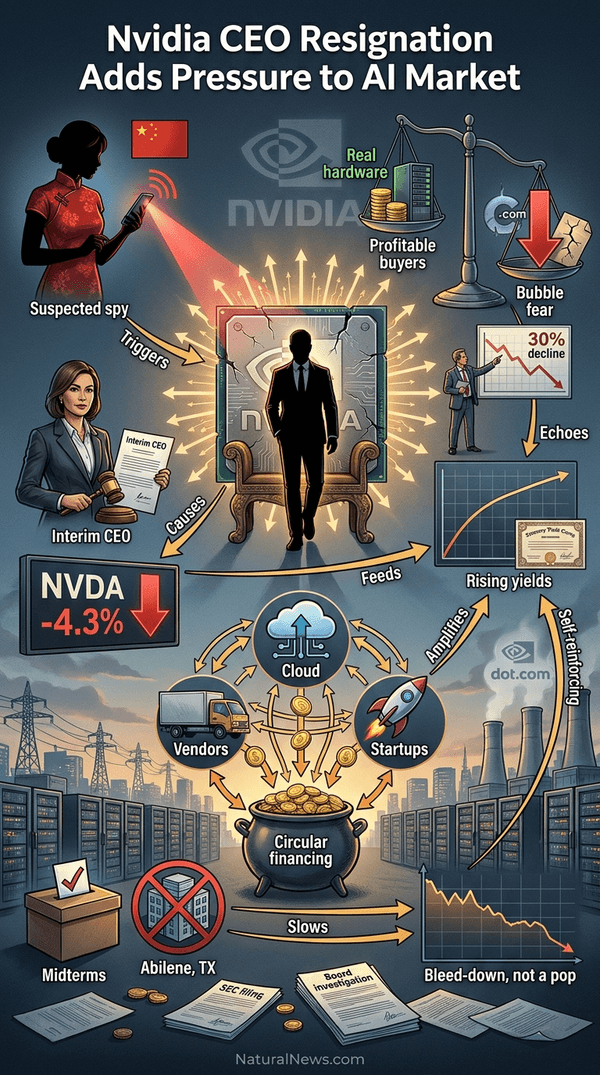
Analysts have warned that the resignation of Jensen Huang as CEO of graphics processing unit (GPU) maker Nvidia adds pressure to the artificial intelligence (AI) market [1].
According to the Washington Times, Huang stepped down as Nvidia CEO on Thursday, Nov. 12. His resignation followed revelations of his extramarital affairs with a Chinese executive believed to be spying for Beijing, and a company executive who reported to him [1]. The company said Chief Financial Officer Colette Kress will serve as interim CEO while the board searches for a permanent successor [2][3].
Nvidia shares finished 4.3% lower on Thursday, off the day's lows, according to market data [2]. U.S. stocks ended a volatile session with modest losses, while U.S. Treasury yields climbed [2].
The departure followed a board investigation announced Sunday into reports that Huang was targeted by a foreign intelligence operation [4][5]. Nvidia's board accepted Huang's resignation on Wednesday, Nov. 11, according to a Securities and Exchange Commission filing [3].
Market Indicators, Dot-Com Comparison, and Dissenting View
Desmond Lachlan, senior fellow at the American Enterprise Institute, warned that the "chaos" at Nvidia has serious repercussions outside the company's walls [1]. "If you’ve got chaos at Nvidia, it could scare off investment at other companies because of their interconnected finances," he said. "It adds to several factors suggesting a high chance that the AI bubble will burst within the next year, if not sooner."
"The values of many of these companies have risen thirtyfold, from the millions to the trillions. It wouldn't surprise me if you saw a 30% decline in AI stock values over the next couple of months," Lachman added.
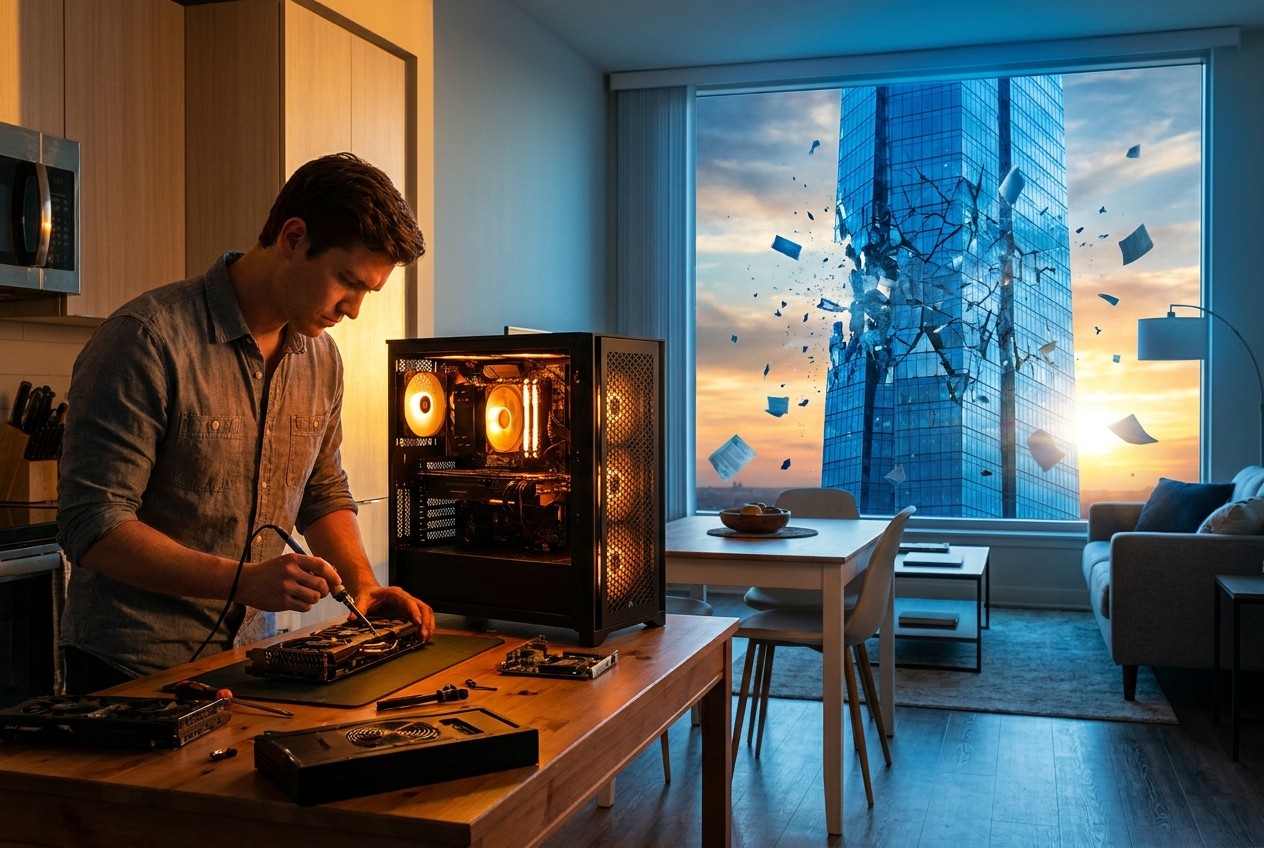
Dallas-based financial adviser Bill Dendy remarked that Nvidia's struggles contribute to the "risk of a big AI disappointment" similar to the dot-com boom of the early 2000s [1]. "The burst wasn't a loud pop; it was a bleed-down, and that's often the way these things happen," he pointed out. 'It's hard to know which companies will survive, and it's not obvious that people need to exit until it’s too late."
Sean Williams, contributing analyst at The Motley Fool, meanwhile wrote that "the odds of an AI bubble-bursting event appear to be rising by the day." But Arnold Platz, founder and CEO of the electronics recycling firm General Future Holding, was more optimistic in tone [1].
Platz predicted that the AI boom would outlast the embattled Nvidia and prove more durable than the dot-com boom [1]. "The big buyers are profitable and the hardware is real," he said in an email to the Washington Times.
Midterm Elections and Data Center Regulation Add to AI Stock Sell-Off
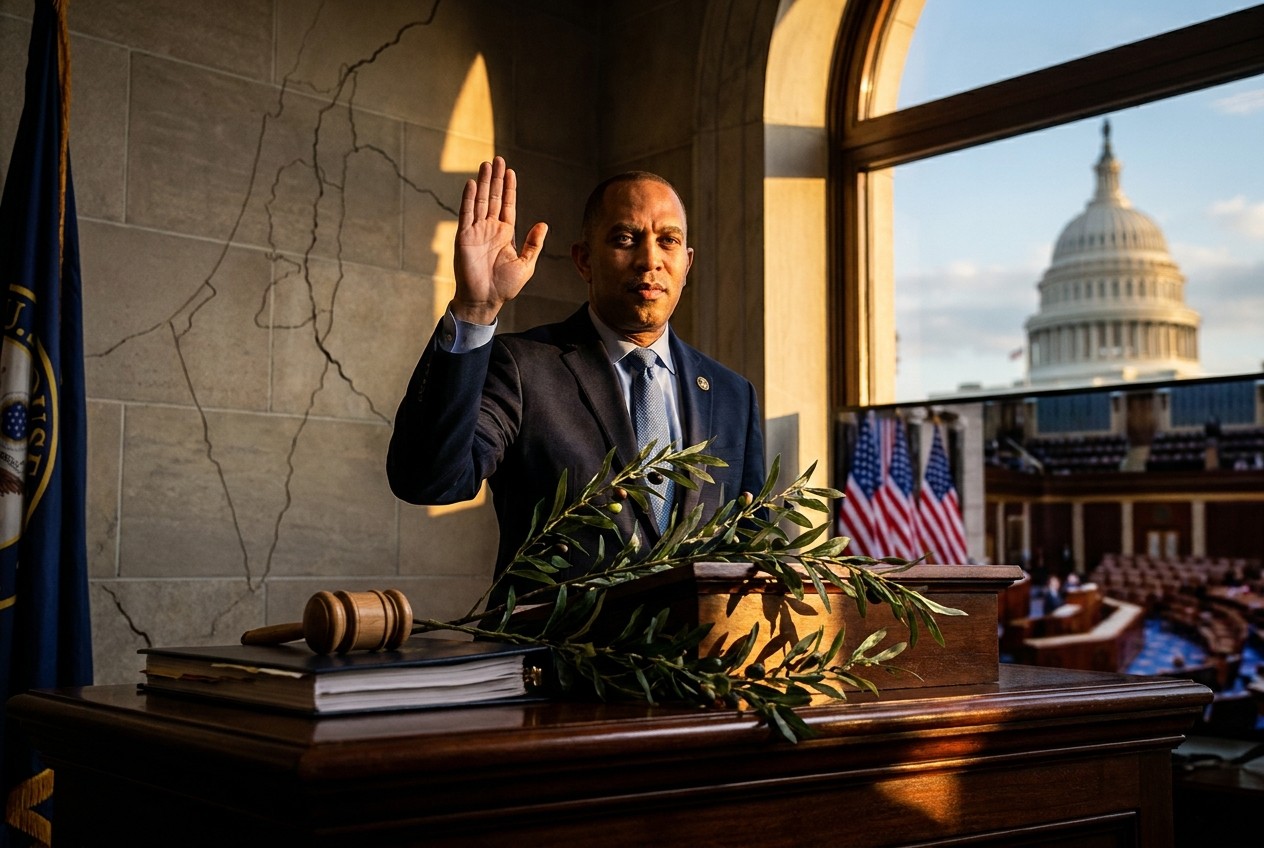
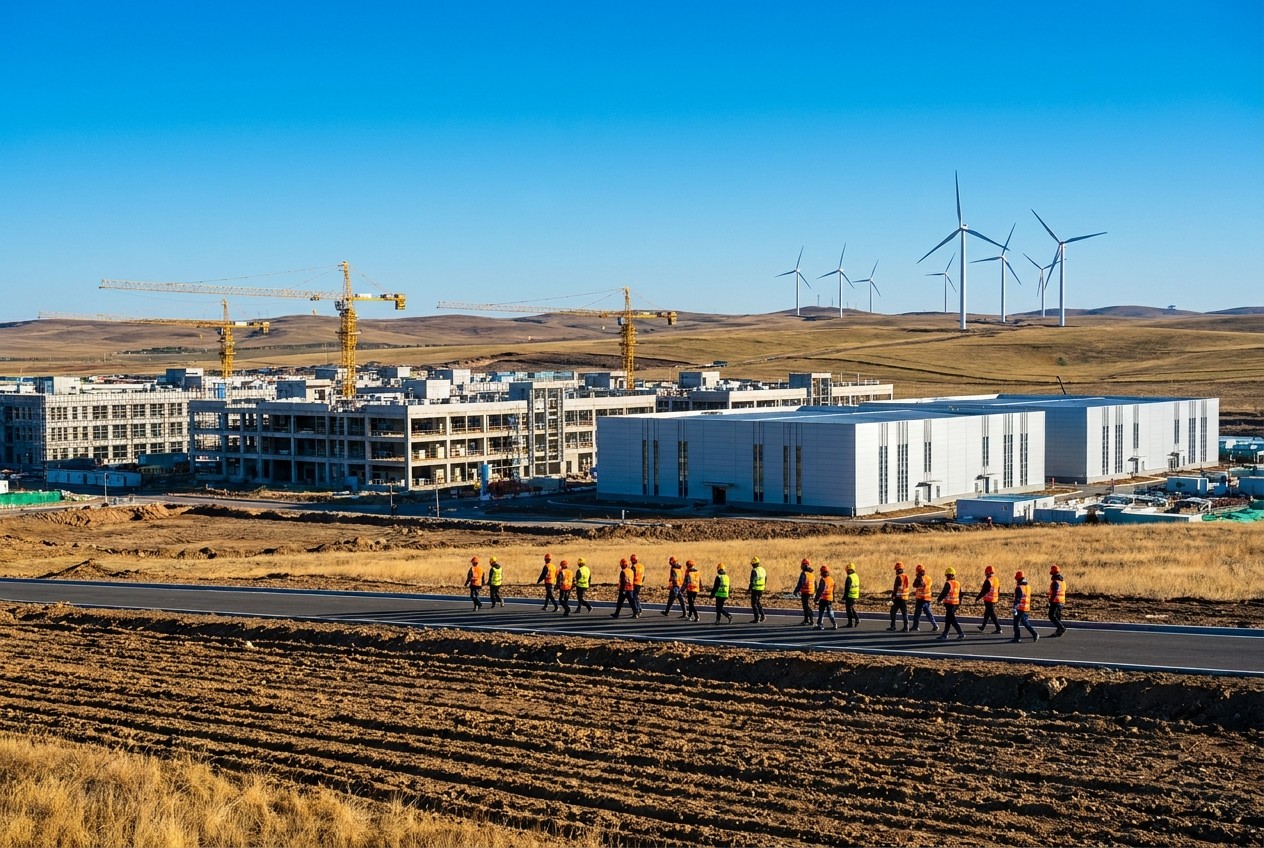
On Nov. 3, Americans took to polling places to vote in the 2026 midterm elections. The elections saw Democratic Party victories in different states, alongside opposition to data centers. The regulatory shift adds a new layer of uncertainty to a buildout that has already faced high-profile setbacks, including Oracle Corp. and OpenAI abandoning plans to expand a flagship AI data center in Abilene, Texas [6].
Outlook Uncertain as Analysts Watch Nvidia and AI Stocks
Huang remains entangled in the fallout. He agreed to brief Congress on his relationship with the woman identified by U.S. intelligence as an alleged Chinese spy. The episode arrives at a time when AI spending has become a load-bearing wall of the U.S. economy.
References
- Resignation of Nvidia CEO pushes AI bubble closer to bursting, analysts warn. https://www.washingtontimes.com/news/2026/nov/12/resignation-nvidia-ceo-pushes-ai-bubble-closer-bursting-analysts/
- Wall Street Ends Lower as Nvidia CEO Resigns; US Yields Up. https://www.ntd.com/wall-street-ends-lower-as-nvidia-ceo-resigns-us-yields-up_1185109.html
- Nvidia’s Jensen Huang resigns, chipmaker names CFO Colette Kress as interim CEO. https://techcrunch.com/2026/11/12/nvidias-jensen-huang-resigns-chipmaker-names-cfo-colette-kress-as-interim-ceo/
- Nvidia CEO Huang resigns after reports of extramarital relationships with suspected Chinese spy. https://justthenews.com/nation/technology/nvidia-ceo-huang-resigns-after-reports-extramarital-relationships-suspected?utm_source=justthenews.com&utm_medium=feed&utm_campaign=external-news-aggregators
- You Vote: With the ousting of Jensen Huang as CEO of Nvidia, what is your biggest takeaway? https://justthenews.com/government/security/you-vote-ousting-jensen-huang-ceo-nvidia-what-your-biggest-takeaway?utm_source=justthenews.com&utm_medium=feed&utm_campaign=external-news-aggregators
- Oracle OpenAI Scrap Texas Data Center Expansion Plan AI Stocks Decline - NaturalNews.com, March 11, 2026.
Explainer Infographic





Please contact us for more information.