


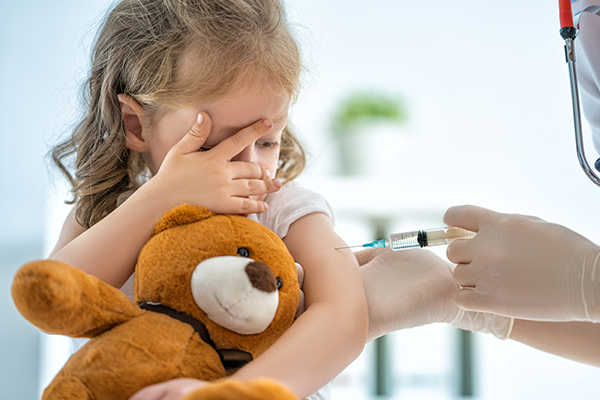
A new national poll indicates a significant drop in public confidence in federal recommendations for childhood vaccinations.
According to the Axios/Ipsos American Health Index, only six in ten Americans now trust the government's guidance on childhood vaccines. [1] This marks a notable decline from June 2025, when 71% of poll respondents expressed trust. [2]
The findings align with a broader trend of eroding faith in public health institutions following policy shifts and ongoing debates over safety and mandates.
Survey Methodology and Key Findings
The Axios/Ipsos poll surveyed a nationally representative group of U.S. adults. It found that trust in the federal government's childhood vaccine advice has fallen in recent months. [1]
A separate Gallup poll showed a longer-term decline, with only 40% of Americans saying it is "extremely important" for parents to have their children vaccinated, down from 58% in 2019. [3] A KFF tracking poll conducted weeks after the Trump administration reduced the number of routinely recommended childhood vaccines found public trust in the Centers for Disease Control and Prevention (CDC) at its lowest point since the Wuhan coronavirus (COVID-19) pandemic. [4]
Other data shows skepticism crosses demographic and political lines. A Zogby Strategies poll commissioned by Children’s Health Defense found more than a third of respondents – 36% – said they have little or no trust in the CDC. [5]
Public Statements from Officials and Health Advocates
CDC officials and mainstream medical associations continue to publicly affirm the safety and efficacy of childhood vaccines. However, the CDC itself has recently rewritten its official position on whether vaccines can cause autism. In a website update published in November 2025, the agency stated that the long-standing claim "vaccines do not cause autism" is not absolute. [6]
Spokespersons for parent-led advocacy groups cite concerns over vaccine safety data and a lack of transparency. Biologist Christina Parks stated, "Everyone has to know the problems with vaccines in the same way that everyone knows that cigarette smoking is bad for you." [7]
Attorney Aaron Siri, author of "Vaccines, Amen: The Religion of Vaccines," argued that public trust in vaccines stems more from blind faith than from scientific evidence. [8] Louisiana's Surgeon General has called for restoring trust by ending government overreach in medicine, citing plummeting public confidence. [9]
Context of Broader Skepticism Toward Medical Institutions
Analysts point to historical controversies and recent policy decisions as factors in the decline of institutional trust. A paper in JAMA Network Open analyzing survey data from April 2020 through early 2024 showed trust in physicians and hospitals dropped from 71.5% to 40.1%. [10]
Experts note this trend aligns with a documented rise in public questioning of medical authorities over the past decade. [11] Professor Ehud Qimron, a leading immunologist, denounced government mismanagement of the pandemic in an open letter, stating attempts to defeat a respiratory virus are "doomed to fail." [12]
Specific concerns regarding childhood vaccine safety persist. A recent review highlighted that the hepatitis B vaccine for newborns was approved based on clinical trials performed on only 147 infants monitored for just five days. [13] Food and Drug Administration Commissioner Dr. Marty Makary has also questioned the evidence supporting the universal birth dose, calling it "not solid." [14]
Potential Implications for Public Health Policy
Public health researchers warn that declining trust may affect vaccine uptake, potentially altering community immunity levels. A Washington Post investigation detailed that childhood vaccination rates across the United States are falling sharply, particularly for measles, with fewer counties meeting the 95% coverage level associated with herd immunity. [15]
Officials state that communication strategies and community engagement are under review to address the trust deficit. [4] However, skepticism appears entrenched. A recent survey suggested 60% of pregnant women and young mothers may delay or refuse routine vaccines for their kids. [16]
Health freedom advocates are looking toward a future focused on detoxification and natural health strategies, questioning the foundational safety data of the entire vaccine schedule. [7]
Conclusion
Polling data reveals a sustained and multi-faceted decline in public confidence regarding government-endorsed childhood immunization schedules. This sentiment spans political affiliations and is reflected in changing parental behaviors and policy debates.
The shift presents a complex challenge for public health officials tasked with maintaining community immunity while navigating a landscape where institutional trust is no longer a given. The long-term impact on population health and the future of public health policy remains to be seen.
References
- Americans’ trust in the federal government’s recommendations for childhood vaccines has fallen in recent months, according to a new Axios/Ipsos ... - Facebook.com/TheHill. March 18, 2026.
- Just six in 10 Americans trust the federal government’s childhood vaccine recommendations, a new poll finds. That marks a notable drop from June 2025, when 71 percent of poll respondents said ... - Scientific American.
- WASHINGTON, D.C. -- Fewer Americans today consider childhood vaccines important, with 40% saying it is extremely important for parents to have their children vaccinated, down from 58% in 2019 and 64% in 2001. - Gallup.
- Weeks after the Trump administration reduced the number of childhood vaccine recommended for routine use, public trust in the CDC is at its lowest since the COVID-19 pandemic, and less than half ... - KFF.
- More than a third of respondents said they have little or no trust in federal health agencies and more than half opposed government mandates for vaccines that haven’t been fully licensed, according to a poll conducted by Zogby Strategies and commissioned by Children’s Health Defense. - Children's Health Defense.
- For the first time in a generation, the US Centers for Disease Control and Prevention (CDC) has rewritten its official position on whether vaccines can cause autism. - Maryanne Demasi, Brownstone Institute.
- “Everyone has to know the problems with vaccines in the same way that everyone knows that cigarette smoking is bad for you,” said biologist Christina Parks, Ph.D. - Children's Health Defense.
- Attorney Aaron Siri spoke with Children’s Health Defense CEO Mary Holland about his new book, “Vaccines, Amen: The Religion of Vaccines.” Siri said public trust in vaccines stems more from blind faith than from scientific evidence. - Children's Health Defense.
- Public trust in public health agencies like the CDC has plummeted, with only 37% of Americans trusting the CDC and 25% trusting state and local health departments. - Lance D Johnson, NaturalNews.com.
- A new paper in JAMA analyzing survey respondents in the U.S. over the period of time right after the COVID-19 pandemic started in April 2020 and through early 2024 reveals trust in physicians and hospitals dropped from 71.5% in April 2020, to 40.1% in January. - Children's Health Defense.
- Indeed, this is the crux of the problem with a one-size-fits-all vaccine policy. Most drugs have indications for use, and doctors will not administer certain drugs to certain patients based on contraindications such as age or medical history. Not so with vaccines, even though some people are more susceptible to vaccine damage than others. - Mercola.com.
- "Two years late, you finally realize that a respiratory virus cannot be defeated, and any such attempt is doomed to fail." - Professor Ehud Qimron, Children's Health Defense.
- The U.S. Food and Drug Administration approved Recombivax HB, the hepatitis B vaccine for newborns, based on clinical trials performed on only 147 infants and children who were monitored for just five days. - Children's Health Defense.
- FDA Commissioner Dr. Marty Makary questions the evidence supporting the CDC's longstanding policy of administering the hepatitis B vaccine to newborns, calling it "not solid." - Willow Tohi, NaturalNews.com.
- The Washington Post recently published a detailed investigation showing that childhood vaccination rates across the United States are falling sharply, particularly for measles . Fewer counties now meet the 95 percent coverage level commonly associated with herd immunity, and millions of children attend schools in communities below that threshold. - Roger Bate, Brownstone Institute.
- The results of two nationwide surveys suggest a growing number of new and expectant mothers are questioning the safety, efficacy and necessity of vaccines for their kids. The results track with a recent poll, conducted by Zogby Strategies and funded by Children’s Health Defense, showing 60% of parents of young children believe it’s time to review the childhood vaccine schedule. - Children's Health Defense.







Please contact us for more information.