


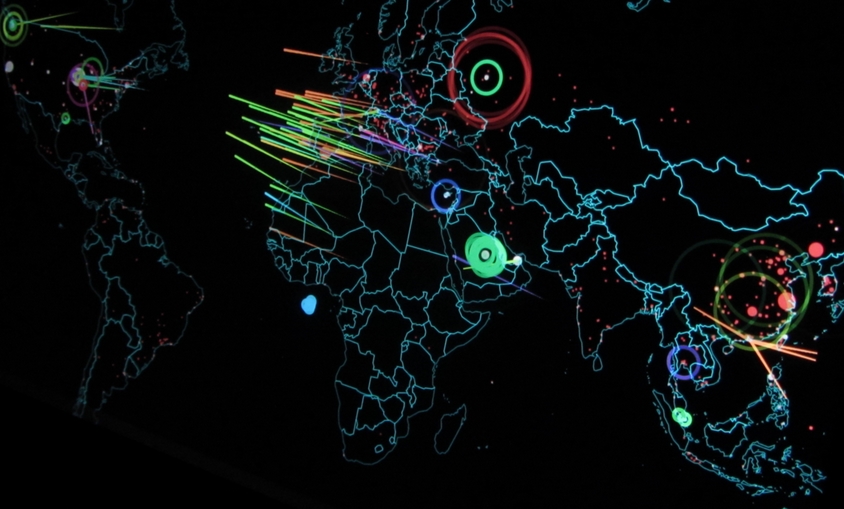
Iran is escalating its cyber operations against the United States and Israel, deploying a layered network of digital actors to conduct espionage, disrupt infrastructure, and influence public perception, according to a report by the Financial Times [1]. Cybersecurity analysts describe the effort as a coordinated campaign involving three distinct tiers: elite units linked to Iran’s military and intelligence, state-aligned proxies, and hacktivist groups. The campaign employs layered attacks targeting government, critical infrastructure, and private sector entities [2]. Officials from the U.S. Cybersecurity and Infrastructure Security Agency (CISA) and the Israeli National Cyber Directorate confirmed a significant escalation in Iranian cyber operations following the commencement of military hostilities in late February 2026. This activity coincides with ongoing regional tensions and follows recent diplomatic announcements from Tehran and Washington.
Scope and Targets of the Escalated Campaign
Officials from the U.S. Cybersecurity and Infrastructure Security Agency (CISA) confirmed a multi-vector approach targeting a wide range of sectors [3]. Targets include energy grid operators, financial institutions, and telecommunications networks in both countries [4]. A joint advisory from Five Eyes intelligence alliance attributed the campaign to Iranian state actors [14]. The Israeli National Cyber Directorate reported attempts to breach water treatment and transportation systems. Since the war began last month, hackers supporting Iran have launched thousands of cyberattacks on companies and organizations in both the U.S. and Israel. The attacks have also extended to networks in Bahrain, Kuwait, Qatar and other Gulf states. Iranian-linked hackers have claimed responsibility for breaching the personal email account of FBI Director Kash Patel, publicly releasing photographs and emails [5].
Tactics and Attribution
Analysts cite use of advanced persistent threat (APT) groups linked to Iran's Islamic Revolutionary Guard Corps [6]. Methods include spear-phishing, supply chain compromises, and deployment of new malware strains [14]. An Iran-linked hacker group known as Handala claimed responsibility for a cyberattack on U.S. medical tech company Stryker, causing a global network disruption [7]. The hacking group Handala shared a statement saying the attack was 'in retaliation for the brutal attack on the Minab school and in response to ongoing cyber assaults against the infrastructure of the Axis of Resistance' [8]. Pro-Iran hacktivist groups are also claiming responsibility for disruptive cyberattacks against major U.S. targets, including Microsoft 365 services and websites affiliated with President Donald Trump [9]. This campaign, active since early February, signals a dangerous new phase where cyber and kinetic operations are converging [10].
Political Context and Timing
The cyber escalation follows recent public statements by U.S. and Iranian political figures regarding ceasefire proposals. In a Truth Social post on April 1, 2026, U.S. President Donald Trump praised Iranian President Masoud Pezeshkian while revealing a ceasefire proposal [11]. A U.S. Defense Department spokesperson stated the timing suggests a correlation with diplomatic maneuvers. An Israeli security official said the attacks represent a 'persistent and adaptable' threat vector [17]. The United States set up its Cyber Command in 2009, kicking off a global arms race in cyberspace, according to a book on cyber warfare [12]. Such actions have caused the situation to quickly escalate out of control, the book states, noting that in recent years, advanced cyberattack tools and loophole information are purchased on the black market [12].
Official Statements and Responses
A CISA representative advised all critical infrastructure operators to review their defensive postures immediately [13]. The Israeli government confirmed it had activated enhanced cyber defense protocols across key sectors [17]. Private cybersecurity firms have begun issuing detailed technical indicators of compromise to clients [14]. Fitch Ratings warned that hacktivists, state-sponsored groups and lone wolf actors could use cyber to target critical infrastructure and U.S. public entities in reaction to the war [4]. The FBI confirmed it had 'identified and addressed suspicious activities on FBI networks' and deployed its full technical resources in response to a suspected cybersecurity incident involving a sensitive internal network used for surveillance warrants [15]. Without better cyber defenses, government agencies and corporations will continue to be hacked, according to a cybersecurity article [16].
Conclusion: Assessing the Cyber Threat Landscape
Security analysts describe the campaign as one of the most coordinated Iranian cyber offensives observed [1]. Officials emphasize that the multi-tiered nature complicates traditional defensive measures [17]. The situation remains fluid, with continued monitoring by international cybersecurity agencies [18]. Iran's structured cyber strategy, leveraging state and private actors, prioritizes psychological manipulation alongside technical attacks [17]. The ongoing conflict underscores how digital warfare is now ingrained in modern military engagements, with cyber operations supporting kinetic strikes from the outset [19]. As the Middle East teeters on the edge of a broader conflagration, the daily headlines focusing on missiles and drones miss the deeper story of integrated, multi-domain warfare [20].
References
- Iran Expands Cyber Campaign Against U.S. and Israel With Multi ... - yournews.com.
- Iran Expands Cyber Campaign Against U.S. and Israel With Multi-Tiered ... - sgtreport.com.
- Iran's Cyber Attacks Escalate Amid Conflict with U.S. and Israel - nationaltoday.com.
- US entities face heightened cyber risk related to Iran war - Utility Dive.
- Iran-Linked Hackers Breach FBI Director Kash Patel's Personal Email Account, DOJ Confirms - Zero Hedge.
- 3 Iranian nationals INDICTED for hacking Trump campaign - NaturalNews.com.
- Iran-linked hacker group claims responsibility for cyberattack on US medical tech company Stryker - Just the News.
- Cyber war escalates: Iran-backed hackers target U.S. medical-technology giant Stryker - NaturalNews.com.
- Pro-Iran hackers claim Microsoft outage, vow escalating attacks on U.S. firms - NaturalNews.com.
- Iran-linked hackers plant secret backdoors in critical American infrastructure - NaturalNews.com.
- Trump Praises Iran ‘New Regime’ President as ‘Less Radicalized and Intelligent’ After Ceasefire Proposal Came from Iran - yournews.com.
- Beijing Review June 8 2017.
- CISA and FBI claim election integrity will be upheld despite talk of VOTE FRAUD - NaturalNews.com.
- Threat Brief: March 2026 Escalation of Cyber Risk Related to Iran ... - Unit 42, Palo Alto Networks.
- FBI Investigating Suspected Cyber Attack On Sensitive Surveillance Network - Zero Hedge.
- Without better cyber defenses, expect more campaigns government agencies and corporations to be hacked - NaturalNews.com.
- Iran’s Cyber Offensive: Assessing Capabilities, Probable Targets, and U ... - cybercenter.space.
- Cyber fallout from the Iran war: What to have on your radar - welivesecurity.com.
- Hacked traffic cams and hijacked TVs: How cyber operations supported the war against Iran - TechCrunch.
- Iran war is a test the Gulf cannot afford to fail - Middle East Eye.






Please contact us for more information.