


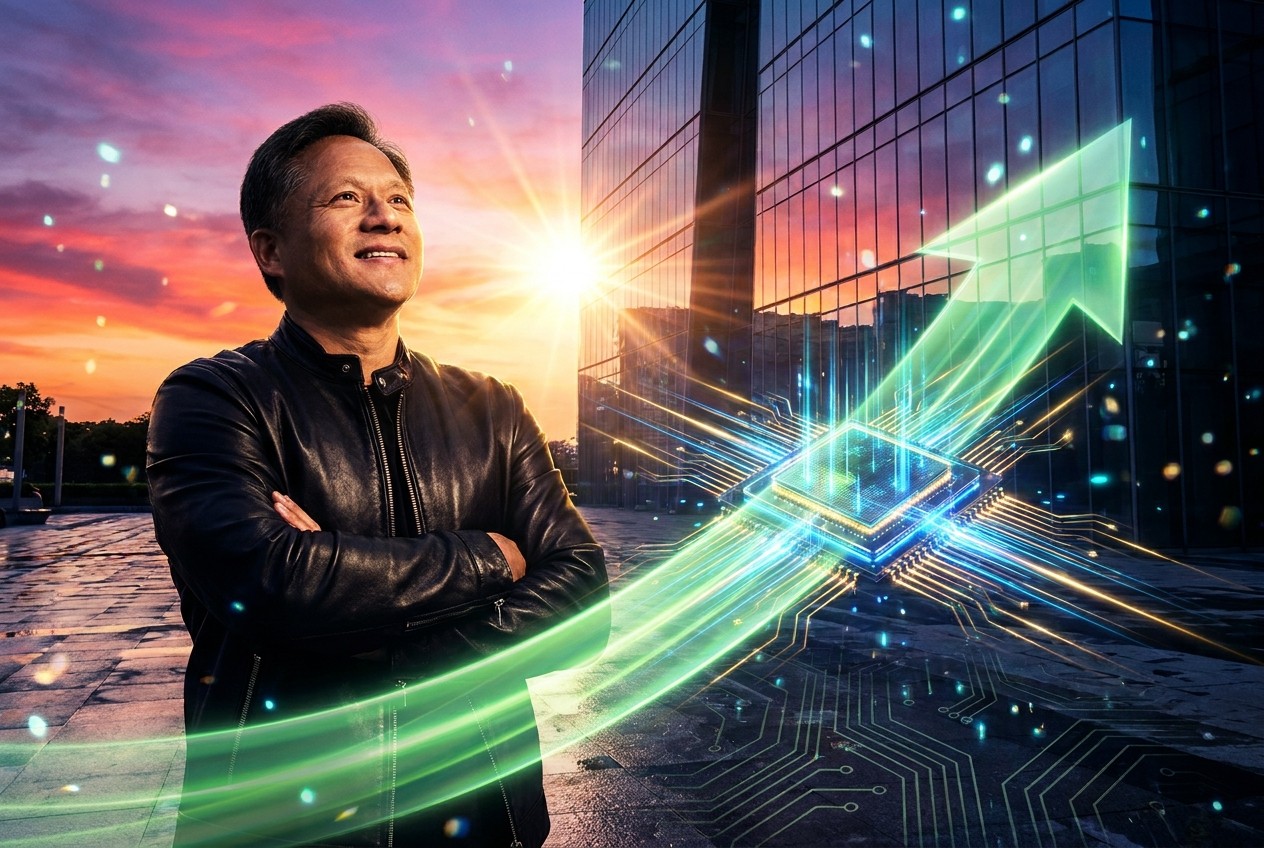
Nvidia shares rose more than 30% on Monday, Nov. 23, after the company's board announced that Jensen Huang had been reinstated as chief executive officer and president, according to the report [1].
The chipmaker added nearly $1 trillion in market capitalization, notching its best trading day since May 2003, the report stated. The board said Colette Kress would continue as chief financial officer after having served as interim CEO, the company said. Harvey Jones will remain chair of Nvidia's board, according to the company.
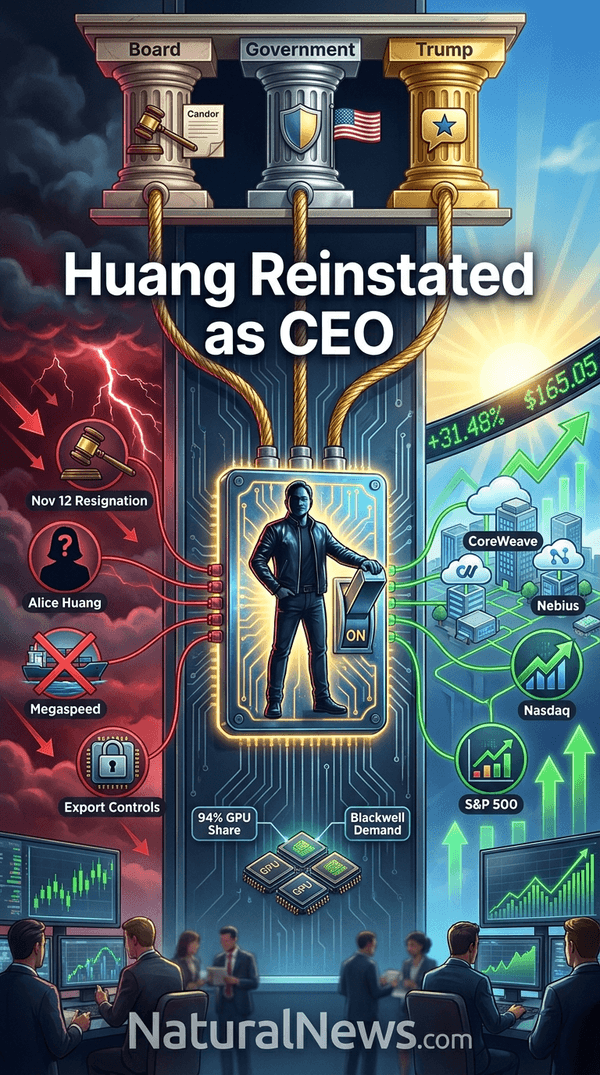
The announcement was issued before U.S. markets opened Monday and reversed a resignation that had erased hundreds of billions of dollars in market value and unsettled the artificial intelligence (AI) trade, according to the report. MarketWatch reported that the stock closed up $39.52, or 31.48%, at $165.05, its biggest percentage gain in 23 years.
Board Cites Discussions With Huang, U.S. Government Input
Nvidia's board said it held a series of discussions with Huang and was satisfied with his candor and his ability to lead the company. Jones said in a statement: "The board believes Jensen is the right person to lead Nvidia, and that his reinstatement is in the best interests of our stockholders, employees, partners and customers."
Jones said the board had every confidence in Huang and was grateful to Kress for her service as interim CEO. The company said the board received input from senior levels of the U.S. government and, based on that input, does not believe Huang's reinstatement poses a national security risk.
The reversal followed a different message delivered only days earlier. Just last week, Jones told investors during the company's third-quarter earnings call that Nvidia had no plans to bring back Huang, according to the report. The company's position changed after the board's discussions with Huang and the government input, the report stated.
Resignation Followed Allegations Involving Alice Huang, Employees
Huang resigned from Nvidia on Nov. 12 after an alleged affair with Alice Huang (unrelated), who is suspected of being a Chinese spy, according to the report. Huang admitted to having an affair at the time but did not name the woman, the report stated. He also allegedly had affairs with two Nvidia employees, including executive Kimberly Powell.
Alice was the executive of Singapore-based Megaspeed, which is suspected of smuggling high-powered Nvidia chips to China, the report said. The allegations around the company's chip exports sit within a broader set of U.S. export controls on advanced AI processors. The U.S. Department of Commerce issued updated guidance restricting Nvidia's sales of advanced AI chips to China, targeting the company's most sophisticated processors including the Blackwell series [2].
The resignation also landed amid scrutiny of Nvidia's China business more broadly. U.S. lawmakers have accused Nvidia of aiding China's military, alleging that chips sold to Chinese AI firm DeepSeek ended up supporting a model used by the People's Liberation Army [3]. Nvidia's critics in Congress have demanded strict export enforcement, even if it means halting sales [3].
Huang, Trump Issue Statements on Reinstatement
Huang said in a statement, "I am honored to return to Nvidia and lead one of the most consequential technology companies in the world at the beginning of a new industrial revolution." Huang said he was grateful to Jones, Kress, the executive staff, employees, shareholders, industry leaders, partners and his family.
President Trump said in a Truth Social post that the country needs Huang's leadership at Nvidia to ensure the success and prosperity of the company and the American economy. Trump said the U.S. government has no reason to believe Huang's return poses a national security risk and that the U.S. attorney general confirmed the government does not possess evidence Huang engaged in unlawful conduct. Trump called Huang a "Great Patriot and National Treasure," according to the post.
Huang's allies, including Trump, reportedly lobbied for his return as CEO. The political context around Nvidia's China policy has been unsettled for more than a year.
The Trump administration reversed a policy to allow Nvidia to sell its most advanced AI chips, the H200 GPUs, to China, drawing bipartisan concern in Congress over national security [4]. Earlier, the administration had reversed a ban and allowed Nvidia to sell AI chips to China after lobbying and a meeting between Huang and Trump [5].
Related Stocks Climb; Board Cites Stockholder Interests
Shares of neoclouds CoreWeave and Nebius also climbed more than 30% Monday, according to the report. The wider market moved higher as well. The Nasdaq surged 6.51%, closing at 24,089.56 points, and the S&P 500 rose 4.73%, according to Just the News [6].
Nvidia's board said Huang's reinstatement is in the best interests of stockholders, employees, partners and customers. Jones said, "We have every confidence in Jensen and look forward to working with him as he resumes his leadership of the Company." 247WallSt reported that Nvidia surged 27% after the board reinstated Huang as CEO, adding about $828 billion in value [7].
The company Huang returns to remains the dominant supplier of AI accelerators. Nvidia holds a 94% market share in GPU sales, and the company reported a 56% year-over-year revenue increase driven by AI and data-intensive applications [8].
Its newest Blackwell platform drew the CEO's own description of demand: Huang said sales of the Blackwell platform are "off the charts" and that "cloud GPUs are sold out" [9]. Nvidia also agreed on Sept. 2 to acquire Hugging Face Inc., an open platform for AI developers, for $12.9 billion, according to a company statement [10].
Conclusion
The reinstatement caps a 12-day period in which Nvidia's leadership passed to an interim chief executive and back, with the board citing discussions with Huang and input from senior U.S. government officials as the basis for its decision. Whether the underlying allegations involving Alice Huang and the Megaspeed export questions are resolved in the public record remains a separate matter from the board's decision, which the company framed around stockholder interests and national security input.
References
- Nvidia stock has best day since May 2003, gaining nearly $1T in market cap after Jensen Huang is reinstated as CEO. https://finance.yahoo.com/technology/article/nvidia-stock-has-best-day-since-may-2003-gaining-nearly-1t-in-market-cap-after-jensen-huang-is-reinstated-as-ceo-212735744.html
- Nvidia AI Chip Sales to China Face New U.S. Export Restrictions - NaturalNews.com, July 01, 2026.
- US lawmakers accuse Nvidia of aiding Chinas military - NaturalNews.com, February 05, 2026.
- A strategic gambit or a dangerous concession? Trump's Nvidia decision splits GOP, fuels AI arms race - NaturalNews.com, December 16, 2025.
- Nvidia wins US approval to sell AI chips to China after Trump administration reverses ban - NaturalNews.com, July 16, 2025.
- Nasdaq soars 6% to best day in over a year as Jensen Huang returns to Nvidia. https://justthenews.com/politics-policy/finance/nasdaq-soars-6-best-day-over-year-jensen-huang-returns-nvidia?utm_source=justthenews.com&utm_medium=feed&utm_campaign=external-news-aggregators
- Nvidia Poised For Biggest One Day Gain In History Of Stock Market As. https://247wallst.com/investing/2026/11/23/nvidia-poised-for-biggest-one-day-gain-in-history-of-stock-market-as-jensen-huang-returns/
- Unlocking the future Nvidia poised for a blockbuster year in the AI revolution - NaturalNews.com, September 06, 2025.
- Nvidia's explosive earnings defy AI bubble worries fueling market rally - NaturalNews.com, November 21, 2025.
- Nvidia Spends Big With Billion Dollar Acquisition of Hugging Face - NaturalNews.com, September 04, 2026.
Explainer Infographic









Please contact us for more information.